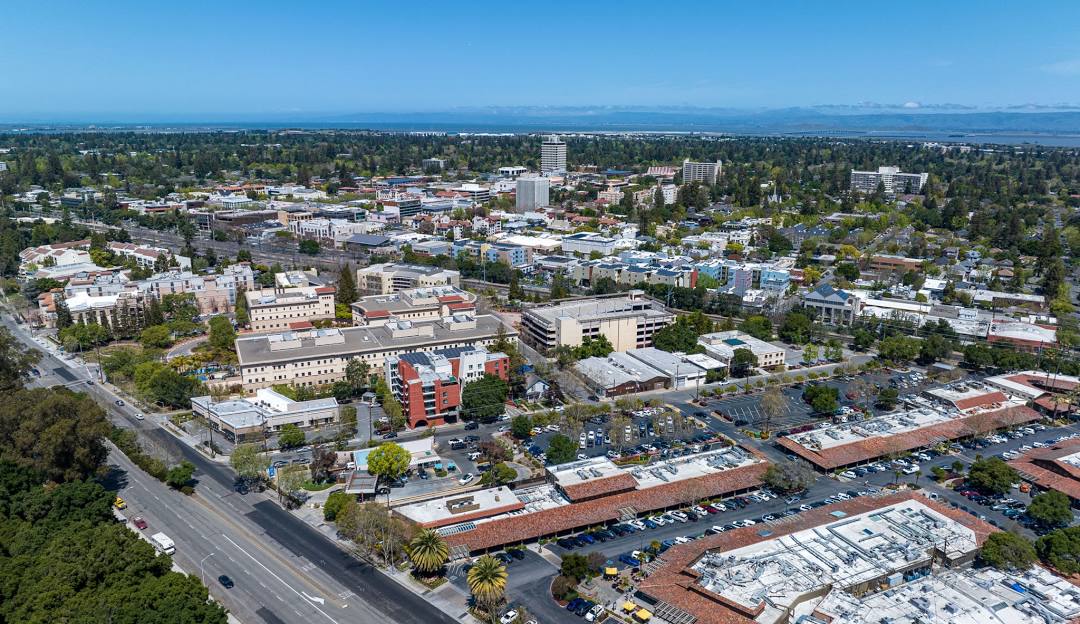
The AI boom has turned routine Menlo Park bidding wars into six-figure escalations, as engineers and executives cashing out AI-company stock compete for a home supply that has barely grown in a decade. Menlo Park's average home value reached $2.89 million in mid-2026, up 7.6% year over year, and the typical listing now goes to pending in 13 days, according to Zillow. Homes are closing right around list price on average, but that citywide figure understates what is happening in Menlo Park's tightest pockets, where AI-company wealth concentrates demand near Meta's headquarters, the Sand Hill Road venture corridor, and the streets closest to downtown. For sellers, that shift is no longer a forecast; it is the reason a listing that drew three offers in 2023 now draws twelve.
Key Takeaways
Menlo Park's average home value reached $2.89 million in mid-2026, up 7.6% year over year, with homes going to pending in a median of 13 days
Five of the seven Bay Area neighborhoods now selling at all-time-high prices sit inside Menlo Park city limits
Pre-IPO tender offers have already put AI-company stock to work in local bidding wars, with a second, broader wave expected once OpenAI and Anthropic lockups lift in spring 2027
The number of spec builders operating in Menlo Park has tripled over the past decade, buying dated homes and reselling renovated versions for millions more
Buyers without AI-company equity are winning offers by removing friction for sellers, through pre-underwritten financing and flexible closing timelines, rather than trying to outbid the competition in cash
Menlo Park's 2026 Numbers, Block by Block
Zillow puts Menlo Park's average home value at $2.89 million in mid-2026, up 7.6% year over year, with a median sale-to-list ratio of 1.018, meaning the typical home closes slightly above its asking price. Move from that citywide average into a specific pocket of Menlo Park and the numbers run hotter. In the Menlo Oaks neighborhood, the median sale price sits just shy of $3.2 million, up 4.2% over the area's pandemic-era peak, according to the San Francisco Standard. Five of the seven Bay Area neighborhoods now selling at all-time highs are inside Menlo Park, a striking concentration for a city of roughly 33,000 residents.
Menlo Park's climb is not an isolated story. It is one data point in how AI wealth is driving Silicon Valley home prices, and the building industry is responding to it directly. Roughly 30 spec-home builders now operate in Menlo Park, up from about 10 a decade ago, and Thomas James Homes alone has completed more than 50 renovation and rebuild projects in the city since entering the market in 2020. One recent project bought a dated 1950s ranch home in West Menlo, expanded it from 2,100 to 3,500 square feet, and resold it for $7.15 million, nearly $3 million above the $4.125 million purchase price.
That level of building activity reflects confidence that AI-driven wealth creation and investment in the region will keep sustaining demand for renovated inventory well beyond this year.
Sources: Zillow, San Francisco Standard.
Why Is AI Wealth Concentrating in Menlo Park?
Menlo Park sits at the physical center of two forces driving Bay Area AI wealth: Meta's global headquarters and the Sand Hill Road corridor, where many of the venture firms funding OpenAI, Anthropic, and dozens of other AI startups keep their offices. Buyers drawn to Meta's Menlo Park campus and buyers chasing the Sand Hill Road effect are often competing for the same small pool of homes, even though their money comes from different sources.
The broader labor market reinforces the trend. AI roles now account for 57% of Bay Area tech job postings, up from 20% in 2022, and the region counted nearly 99,000 AI-skilled workers as of June 2026. The Bay Area added more than 20,000 AI jobs over the past year alone, and a large share of that hiring is happening within a few miles of Menlo Park.
Not every AI-adjacent buyer is a brand-new hire cashing out equity for the first time. Some are longer-tenured employees or investors diversifying years of Nvidia stock gains into Silicon Valley real estate, converting a concentrated position into a tangible, local asset instead of holding it all in one ticker. Both groups show up at the same open houses, competing for the same handful of listings.
That competition helps explain why tech executives increasingly choose Menlo Park over comparably priced homes elsewhere on the Peninsula. Proximity matters when a five-minute commute means more hours at a desk during a stretch when AI companies are racing to ship product.
The Two Waves of AI Wealth Hitting the Market
The current run increasingly looks like the first of two distinct waves. The first draws on pre-IPO liquidity: employees who sold shares privately through tender offers, before OpenAI or Anthropic ever files to go public, are already bidding today. What a tender offer actually means for a Menlo Park buyer is worth understanding on its own, since it explains why some buyers show up with cash that has nothing to do with a public stock sale.
Wave one buyers concentrate on the top of the market, targeting large parcels near downtown Palo Alto and Atherton and showing little sensitivity to mortgage rates. Median down payments on Bay Area luxury purchases held at 35% through 2025, according to a Realtor.com report from May 2026, which works out to roughly $198,000 more upfront than buyers typically put down before 2023 on a comparable $3 million purchase.
Wave two has not arrived yet. Lockup periods after a tech IPO typically run 90 to 180 days, so if OpenAI or Anthropic goes public in late 2026 as many expect, employees would not be free to sell shares until spring 2027. An OpenAI or Anthropic IPO matters most for Menlo Park's $3 million to $6 million segment, since wave two is expected to reach a much broader group of employees than the tender-offer buyers active today.
What Does a Menlo Park Bidding War Actually Look Like?
Sellers routinely receive offers with waived loan and inspection contingencies, escalation clauses that automatically beat competing bids by a set increment, and closing timelines built around what the seller needs rather than what a lender requires. Competing with all-cash buyers in Menlo Park has become its own specific skill set for agents representing anyone financing a purchase.
The intensity is not confined to Menlo Park. In nearby Atherton, a one-acre lot on Fairview Avenue sold for $10.7 million against a $7.8 million asking price, essentially a bidding war over land alone. A property in Portola Valley sold for $56 million. At one Peninsula open house in August, every single visitor had driven down from San Francisco, the Almanac reported, a pattern that is becoming common across price points.
Where Menlo Park's Bidding Wars Are Concentrated
Buyers who just accepted an offer from Meta, Google, or Nvidia and are still deciding where to live tend to start their search in one of four Menlo Park pockets, each drawing a different kind of buyer.
The Willows: Closest to Meta's campus, and popular with relocation-package buyers who move fast and rarely negotiate on price.
Sharon Heights: Borders the Sand Hill Road corridor and Stanford's golf course, drawing VC-adjacent buyers who value the short commute.
West Menlo Park: Unincorporated, zoned for Las Lomitas schools, and rarely home to more than a handful of active listings at once.
Allied Arts: Walking distance to downtown's Santa Cruz Avenue, appealing to buyers who prioritize walkability over acreage.
For buyers torn between two of these pockets, Sharon Heights and Central Menlo Park compare differently depending on commute priorities and lot size.
How Can Buyers Compete Without AI-Company Equity?
Most buyers browsing Menlo Park's current homes for sale are not sitting on eight figures of newly liquid stock, and they do not need to be to win an offer. Sellers in a market this tight tend to care more about certainty than about who has the biggest number on a pre-approval letter.
Pre-underwritten jumbo financing removes the appraisal and loan contingencies that make financed offers look risky next to cash. Pairing that with a flexible closing date, or a short-term leaseback that lets the seller stay in the home a few extra weeks, often matters more to a seller than an extra 2% on the purchase price. Working with buyer representation built specifically around winning Menlo Park offers also opens access to off-market conversations before a listing goes live.
What Record Prices Mean for Menlo Park Sellers
Inventory has not kept pace with demand, which gives sellers unusual leverage heading into 2027's expected second wave of AI liquidity. Pricing a Menlo Park luxury listing correctly from day one still outperforms testing the market high and chasing it down, even in a seller's market this strong.
Timing a listing around Menlo Park's seasonal patterns matters too. Sellers who list before the next wave of post-lockup liquidity reaches the market may find less competition among buyers today, while sellers who can wait may find a deeper, wealthier buyer pool in 2027.
Menlo Park's market increasingly runs on a timeline set inside AI-company boardrooms as much as by mortgage rates. The Straser Silicon Valley Team tracks both, and works with buyers and sellers moving through this shift every week. Reach out to talk through a specific address, a specific offer, or a specific timeline before the next wave of liquidity hits.
Disclaimer: This article is for general informational purposes only and does not constitute financial, legal, or investment advice. Real estate and stock market data referenced here reflect conditions and third-party reporting at the time of publication and are subject to change. Past market trends do not guarantee future results. Readers should consult a licensed real estate professional, financial advisor, or attorney before making any buying, selling, or investment decisions.