If you are drawn to privacy, greenery, and a quieter daily pace, Atherton stands out quickly. Life here is not built around busy retail streets or commercial hubs inside town limits. Instead, it centers on residential streets, mature trees, and a calm rhythm that feels distinctly separate from much of the Peninsula. If you are wondering what that looks like day to day, here is a practical look at what everyday life feels like in Atherton. Let’s dive in.
A quiet residential setting
Atherton is a very small town with an estimated 7,022 residents spread across 5.02 square miles, according to U.S. Census QuickFacts. The town has 2,266 households, an 87.4% owner-occupied housing rate, and 82.6% of residents were living in the same home a year earlier. Those numbers point to a place with a notably stable residential pattern.
That stability shows up in the way the town feels. Atherton was shaped to remain residential, and the town confirms there are no commercial zones and no commercial-residential uses. In practical terms, that means your surroundings are defined more by homes, landscaping, and local streets than by storefronts or mixed-use blocks.
Trees, space, and a slower pace
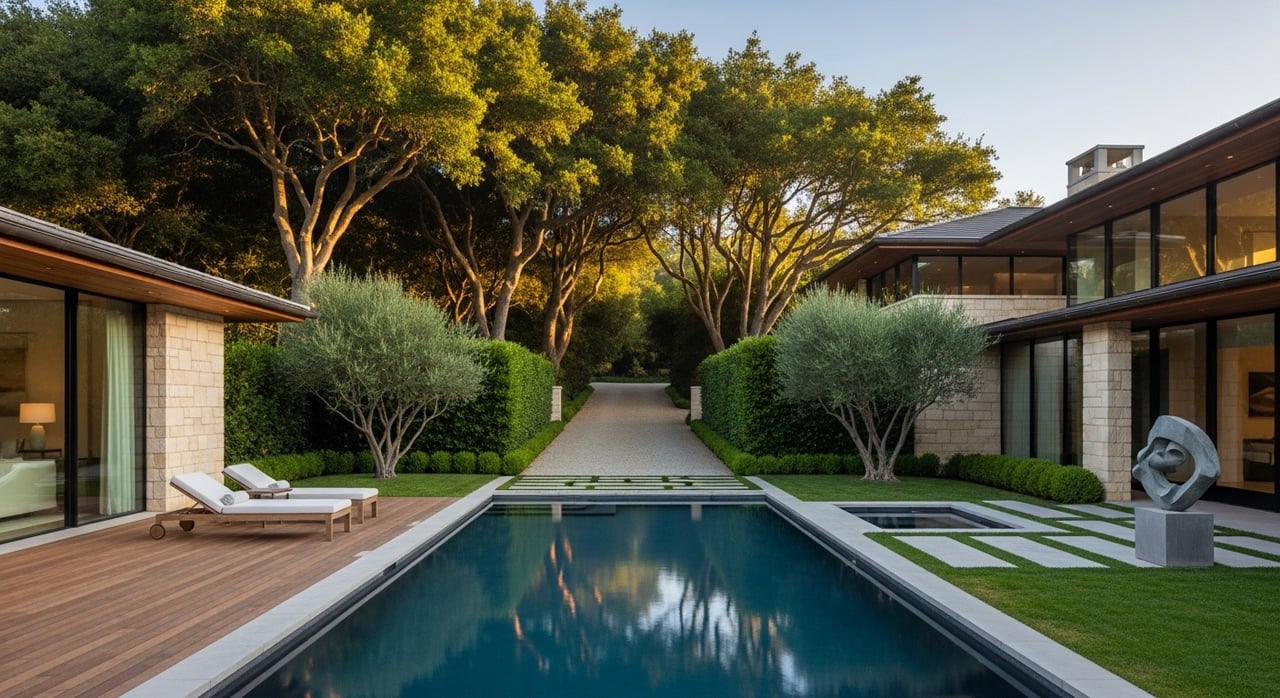
Atherton’s identity is closely tied to its landscape. The town’s history page describes an area long covered by native oaks and other trees, and that tree-lined character still shapes the experience of moving through town today. The same materials note about 50 miles of roads, which gives Atherton a broad, spread-out feel despite its small footprint.
The town’s planning documents also emphasize preserving scenic, quiet rural character and large-lot development. That helps explain why everyday life here often feels more serene than dense. You notice the canopy, the setbacks, and the sense of breathing room.
Daily life is calm, but not disconnected
One of the most defining parts of life in Atherton is that it feels intentionally low-key. The town’s Neighborhood Traffic Management Program exists in part to address cut-through traffic on residential frontage streets and to help preserve quiet neighborhood conditions. That focus supports a day-to-day atmosphere that is more low-speed and residential than commercial or high-traffic.
At the same time, Atherton is not cut off from the rest of the Peninsula. The town’s location near key north-south routes like El Camino Real, Middlefield Road, and Alameda de Las Pulgas keeps you connected to nearby destinations. The result is a lifestyle that can feel secluded at home while still practical for work, errands, and dining beyond town boundaries.
Weekdays have their own rhythm
Atherton can feel busier on weekdays than its population alone might suggest. The Atherton Police Department notes that the weekday population rises because of schools within town limits and ongoing construction projects. So while the town is quiet by design, the daily rhythm does shift depending on the time and day.
That same police department page describes Atherton as having an extremely low crime rate. For many buyers, that contributes to the overall sense of calm and order they notice when spending time in the area. It is one more factor that shapes the town’s distinctly measured pace.
Most errands happen outside town
Because Atherton has no commercial zones, daily convenience works differently here than it does in a walkable downtown environment. Most dining, shopping, and everyday errands happen in nearby communities rather than inside Atherton itself. If you move here, you are choosing a residential setting first and relying on neighboring districts for many routine stops.
That pattern is well supported by the town’s location. Atherton’s corridor planning also focuses on improving walking, biking, transit access, and connections to activity centers in nearby areas. In other words, the town’s quiet character is balanced by easy access to fuller service districts close by.
Nearby downtowns add convenience
This is where Atherton’s location becomes especially appealing. Downtown Menlo Park offers shops, eateries, outdoor dining, convenience stores, and a farmers market. Nearby downtown Redwood City is known for a dense dining scene around Courthouse Square, and University Avenue in Palo Alto is another established destination for shopping, dining, and entertainment, as summarized in the research provided.
For many residents, that means your daily life can be split in a useful way. Home feels quiet, green, and residential, while dining out, coffee meetings, or shopping are just a short drive away. That combination is a big part of Atherton’s appeal.
Parks anchor local recreation
Even in a town without commercial districts, there are still meaningful local places to spend time. Holbrook-Palmer Park is Atherton’s main recreation anchor, with 22 acres of gardens, a ball field, tennis courts, a playground, and walking paths. The town also offers day-use permits and facility rentals there.
According to the town’s general plan, Holbrook-Palmer Park is Atherton’s primary outdoor recreational facility and is intended to remain a tranquil haven while supporting community activities and events. That balance says a lot about the local lifestyle. Recreation here tends to feel open-air, peaceful, and community oriented rather than crowded or highly programmed.
The library adds a civic hub
Atherton’s newer library, located among old-growth trees near the Civic Center, adds another layer to everyday life. It includes a quiet reading room, makerspace and digital lab, meeting rooms, children’s areas, and tech resources. In a town with no retail core, spaces like this matter.
The general plan also identifies Town Center Park next to the library as a quieter setting for reading and other passive activities. Together, the library and adjacent civic spaces create a useful local gathering point. They offer somewhere to go that feels connected and communal without changing the town’s calm residential identity.
Community life is subtle but active
Atherton is not a town built around a bustling main street, but that does not mean there is no community life. The town’s events calendar shows seasonal gatherings, family events, arts programming, speaker series, and community mixers at the library, Town Center, and Holbrook-Palmer Park. These events help create touchpoints throughout the year.
That kind of programming gives everyday life a quieter social texture. You may not have a retail district at the center of town, but you do have civic spaces and scheduled events that bring people together. For many residents, that feels more intentional and less hectic.
Commuting and movement beyond town
Atherton is primarily residential, and many people who live here appear to commute elsewhere on the Peninsula or beyond. Census QuickFacts lists a mean commute time of 23.7 minutes. While that number does not tell the whole story, it supports the idea that Atherton often functions as a home base rather than a place where all daily needs are met internally.
The town is also studying ways to improve how people move along major corridors, including sidewalks, bus stops, and bikeways along El Camino Real, based on its traffic and corridor planning materials. That matters if you value optionality in how you get around. Even in a car-oriented residential setting, better connections to surrounding destinations can shape daily convenience.
What Atherton lifestyle often means
At a practical level, everyday life in Atherton often means choosing privacy, space, and a residential atmosphere over in-town retail convenience. You trade the energy of a commercial center for tree-lined streets, local parks, civic gathering spaces, and a quieter pace. For many buyers, that is exactly the point.
It is also a lifestyle that works especially well if you want a home environment that feels tucked away while keeping Menlo Park, Redwood City, and Palo Alto close at hand. Atherton feels secluded, but it does not feel isolated. That balance is what makes the town distinctive on the Peninsula.
If you are considering a move to Atherton and want a clear, discreet perspective on how the town fits your lifestyle goals, the Straser Silicon Valley Team can help you evaluate the market with local insight and white-glove guidance.
FAQs
What is daily life like in Atherton, California?
- Daily life in Atherton tends to feel quiet, residential, and tree-lined, with most activity centered around homes, local parks, the library, and nearby downtowns outside town limits.
Does Atherton, California have shops and restaurants?
- No. Atherton confirms there are no commercial zones, so most shopping, dining, and errands happen in nearby places such as Menlo Park, Redwood City, and Palo Alto.
What are the main community spaces in Atherton?
- Key public gathering spaces include Holbrook-Palmer Park, the Atherton Library, and Town Center Park near the Civic Center.
Is Atherton, California more private than other Peninsula towns?
- Atherton’s planning emphasis on quiet residential streets, scenic character, large-lot development, and the absence of commercial zones contributes to a more private and low-key feel than many nearby communities.
How big is Atherton, California?
- Atherton is a small town with an estimated 2024 population of 7,022 residents across 5.02 square miles, according to U.S. Census QuickFacts.
What makes Atherton appealing for homebuyers?
- Many buyers are drawn to Atherton for its stable residential character, mature trees, local open space, civic amenities like the library and park, and convenient access to nearby Peninsula destinations.