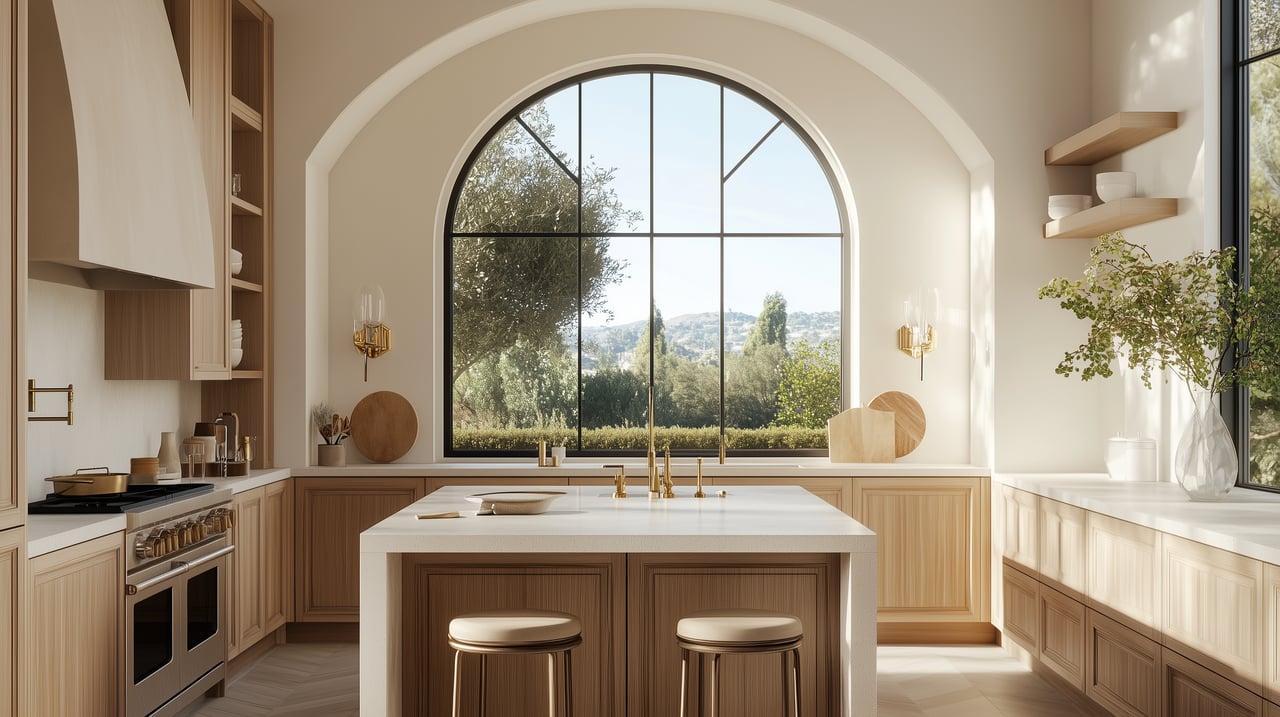
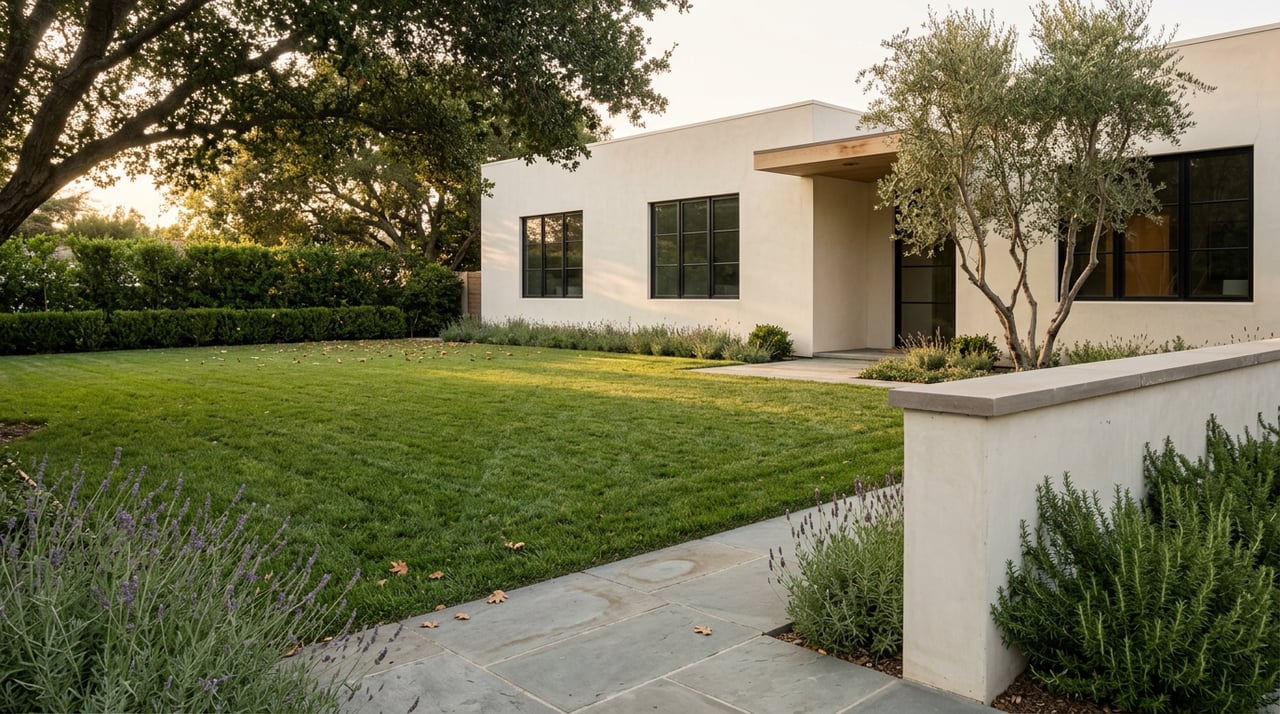
In May 2026, a hillside estate at 27500 La Vida Real went on the market for $37 million. The Real Deal reported that listing agent Ken DeLeon framed the number as a potential bargain rather than a stretch. Construction costs have surged, he said, and rebuilding a home like it today could cost more than the asking price before a buyer even pays for the land underneath it.
Two months later, a very different Los Altos Hills sale closed quietly. A European-style villa with a rec room, fitness center, theater, wine cellar, and six-car garage sold for $15.2 million, part of a batch of closings between June 1 and June 26 that the Almanac reported on July 24 as part of its weekly Midpeninsula sales roundup.
Two transactions, two very different homes, and the same underlying tension: in Los Altos Hills, the sticker price keeps climbing while the price per square foot tells a quieter, more complicated story. Anyone comparing this town to Los Altos itself, the walkable village just down the hill, needs to understand why that gap exists before they write an offer.
The number that doesn't add up
Look at the median sale price alone and Los Altos Hills reads as the more expensive market by a wide margin. Look at the price per square foot and the ranking flips.
| Metric (3 months ending May 2026) | Los Altos Hills | Los Altos |
|---|---|---|
| Median sale price | $5.3M | $4.2M |
| Price per square foot | $1.66K | $1.94K |
| Days on market | 15 (up from 9 a year ago) | 10 (up from 9 a year ago) |
| Homes sold in May 2026 | 28 (up from 22) | 103 (up from 82) |
A buyer comparing these two markets on median price alone would conclude that Los Altos Hills is the pricier neighborhood by roughly 26 percent. A buyer comparing them on price per square foot would conclude the opposite. Los Altos commands roughly 17 percent more per square foot of house than the town next door, even though its overall median runs lower.
Neither number is wrong. They're measuring different things, and the gap between them is the whole story.
What the price per square foot actually prices
A median sale price captures whatever mix of homes happened to close that quarter. Price per square foot tries to normalize for size, which is useful, except that Los Altos Hills isn't really selling square feet of house. It's selling acreage, and the town's zoning makes that explicit. Custom home builders working in the area note that lots run to a one-acre minimum in most zones, and that reality shapes everything about how a buyer should read the per-square-foot figure.
When land is the scarce input and the house is almost incidental to it, price per square foot compresses. A modest home on a flat, private acre with a view can command a total price that would buy a much larger house in a denser, walkable neighborhood, precisely because the buyer isn't paying for square footage. They're paying for the acre.
Los Altos, by contrast, sells a different kind of scarcity: proximity. It sits closer to the office campuses that anchor the Peninsula's economy, and buyers who need a short commute pay for that convenience on a per-square-foot basis rather than a per-acre basis. That's a structural difference in what each market is actually pricing, not a signal that one town is a better value than the other.
The rebuild math nobody puts in the listing
The La Vida Real estate is the clearest illustration of why a low price per square foot in Los Altos Hills isn't the discount it looks like on paper.
Construction costs have surged.
That's the whole quote from DeLeon, and it understates the arithmetic. Custom home builders working in Los Altos Hills in 2026 report construction costs of $400 to $650 or more per square foot, and that figure doesn't include what a hillside lot adds on top of the structure itself:
- Extended driveway construction, often $15,000 to $50,000 or more
- Septic systems on parcels without municipal sewer access, adding $30,000 to $80,000 or more
- A geotechnical investigation required for nearly every hillside project, running $8,000 to $20,000, before grading or foundation work even begins
Add land, structure, and site work together, and total project budgets in the town commonly land between $6 million and $15 million or more, a range that overlaps almost entirely with what existing homes there already sell for. That overlap is the real message hiding inside the price-per-square-foot number. A home selling at $1.66K per square foot isn't cheap to replace. It's priced close to what it would cost to build again from scratch, which is a very different thing from being underpriced.
Two buyer pools, not one market
The days-on-market gap in the table above is doing more work than it looks like. Los Altos Hills homes are taking 15 days to sell against 10 in Los Altos, and that six-day spread reflects a genuinely thinner pool of buyers who want what the Hills specifically offer: acreage, setback, and a level of privacy that a denser lot can't replicate.
That pool doesn't shop the same way a Los Altos buyer does. A buyer prioritizing a short commute treats homes close to major employers as substitutes for each other and competes hard on the ones that fit, which is part of why Los Altos saw 103 sales in May against 28 in the Hills over the same window, and why its price per square foot keeps climbing even as its median cools. A buyer prioritizing privacy and land in Los Altos Hills is shopping a much shorter list, and that list doesn't get longer just because the town's overall median softens.
Both markets showed a median sale price decline over the past year, down 9.46 percent in Los Altos Hills and 13.8 percent in Los Altos through the three months ending May 2026. Neither decline should be read as the towns becoming more alike. They're two markets moving on different mechanisms, cooling for different reasons, and likely to reprice on different timelines when demand firms back up.
What this means if you're deciding between the two
A buyer trying to choose between Los Altos Hills and Los Altos on the strength of a median price comparison alone is comparing the wrong number. The better question is what you're actually trying to buy. If it's land, privacy, and room to build the home you want on your own terms, the per-square-foot discount in the Hills is real, but it comes with a rebuild math that a buyer needs to run before assuming it's a bargain. If it's proximity to work and a walkable village center, Los Altos will keep charging a premium for that convenience regardless of what the Hills' median does.
Either way, the number that matters isn't the one on the listing sheet. It's the one you get after pricing the land, the structure, and what it would actually cost to replace both.
If you're weighing these two markets against each other, or trying to price a Los Altos Hills property correctly against what a buyer would actually pay to rebuild it, Straser Silicon Valley offers a white-glove consultation built around exactly this kind of comparison, using current comparables and the rebuild economics specific to your parcel.