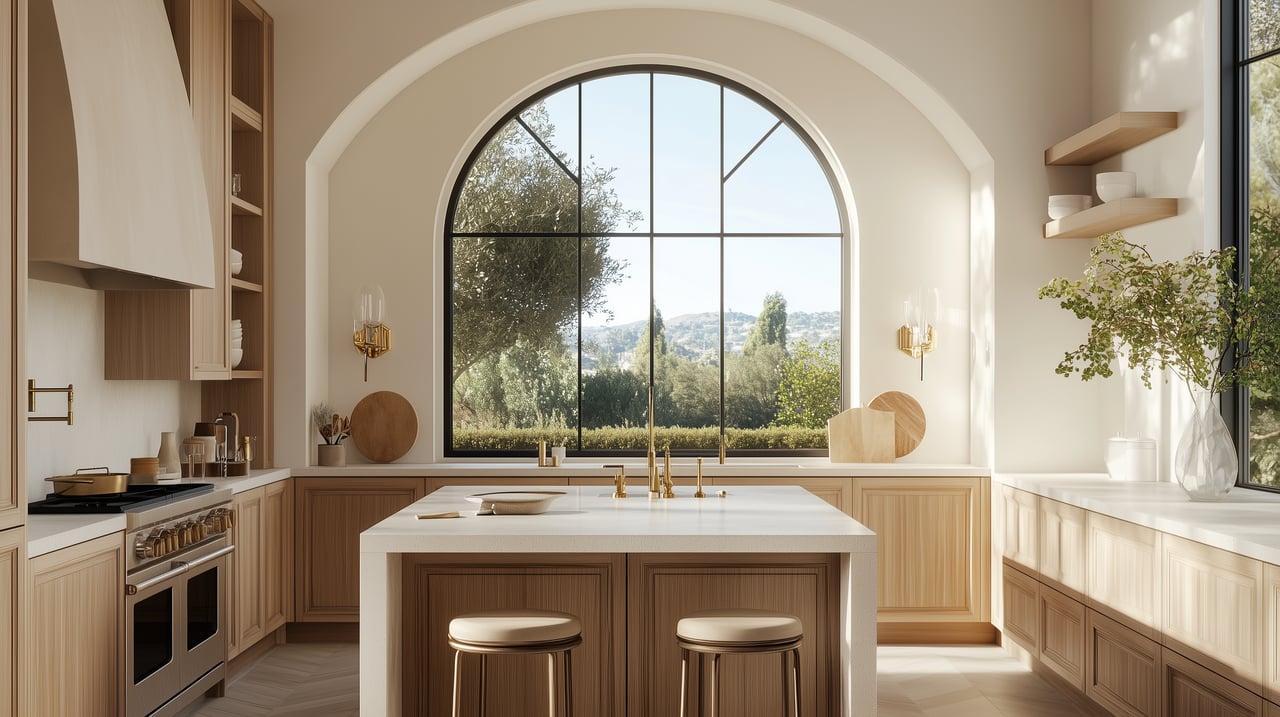
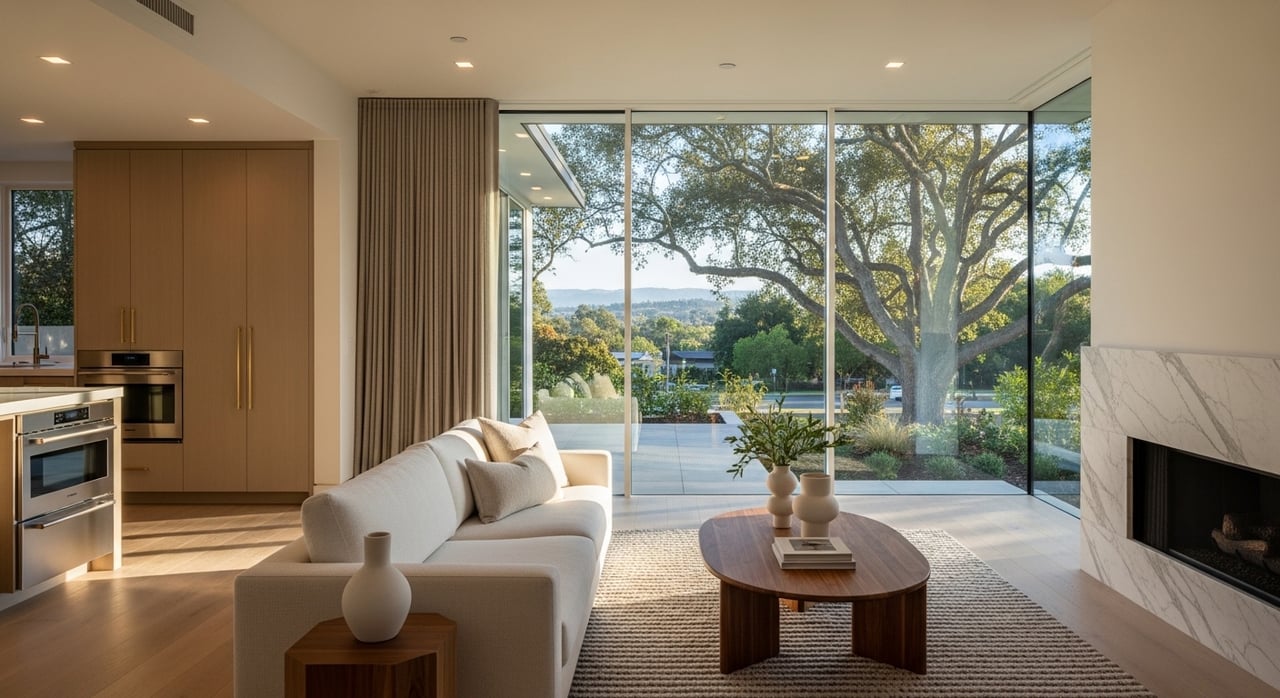
Thinking about trading yard work for a simpler, lock-and-leave lifestyle without giving up quality or location? If you live in or love Menlo Park, you have strong options in well-kept condos and townhomes near downtown Santa Cruz Ave, parks, and Caltrain. You want easy living, secure parking, and great design, all in a building that is well run. This guide shows you what to expect on price and features, how to evaluate HOAs, financing, EV charging, and taxes, plus a checklist to make your move smooth. Let’s dive in.
Why Menlo Park fits luxury downsizers
You can keep your Peninsula routine and simplify life at the same time. Menlo Park offers low-rise and mid-rise buildings near Santa Cruz Ave and Sharon Heights, with quick access to Burgess Park, Holbrook‑Palmer Park in nearby Atherton, and Bedwell Bayfront Park. For day trips and city nights, the Menlo Park Caltrain station connects you to Palo Alto, Redwood City, and San Francisco. Explore schedules and station info on the official Caltrain page for Menlo Park Station.
Inventory for condos and townhomes is tighter than single-family homes in many Mid‑Peninsula submarkets, so the right building and floor plan often matter more than broad averages. Expect well-located homes to move quickly when they are priced and presented well. Work closely with your agent to monitor specific buildings you like and be ready when a unit comes to market.
What you can buy: condos vs. townhomes
Menlo Park offers a range of 1 to 3 bedroom condos and townhomes that appeal to longtime homeowners who want less upkeep and more convenience. The most common targets are modernized 1 to 2 bedroom condos and 2 to 3 bedroom townhomes with private garages.
- Pricing ranges you will often see: many updated 1 to 2 bedroom condos trade in the low to mid $1M range, with newer or premium units climbing higher. Larger or newer townhomes in central locations can land from roughly $1.5M to $3M+. Citywide, single‑family home medians are often reported in the low $3M range during 2025 to early 2026, which is why attached homes can be an attractive step. Actual pricing depends on building, condition, location, and parking.
1‑bedroom condos
- Typical size: about 600 to 900 square feet in older low‑rise buildings, with some newer plans running larger.
- Who they suit: buyers who want true lock‑and‑leave living with minimal maintenance and a comfortable pied‑à‑terre feel.
- Key considerations: elevator access, storage options, and whether you get one deeded parking space vs. assigned or tandem.
2‑bedroom condos
- Typical size: about 900 to 1,400 square feet in low‑rise or mid‑rise buildings.
- Why they are popular: flexible layouts support an office or guest room, and many offer private patios or terraces.
- What to watch: HOA dues vs. amenity value, plus proximity to downtown or Sharon Heights shops.
Townhomes and stacked townhouses
- Typical size: about 1,300 to 1,900+ square feet over two or three levels.
- Why they appeal: private 2‑car garages, more storage, and a layout that feels closer to a single‑family home without the yard.
- Tradeoffs to consider: stair count and whether the community includes a pool, fitness room, or security features that justify higher HOA dues.
Amenities that matter most
Lock‑and‑leave convenience
Many downsizers want secure entry, keyless access, package rooms, and on‑site or responsive management. Ask about weekend staffing, delivery procedures, and how maintenance is handled if you travel. Buildings with concierge‑like services often have higher HOA dues, which can be worthwhile if you value time and convenience.
Accessibility and aging‑in‑place
Look for single‑level floor plans, elevators, wider doorways, step‑free entries, and in‑unit laundry. If you plan to stay long term, prioritize elevator buildings and first‑floor options with patios or terraces.
Parking, storage, and EV charging
Parking is a major value driver. Some condos include one deeded stall while townhomes often provide a private 2‑car garage. Confirm whether your space is deeded or assigned, if it is tandem, and what guest parking is available. Storage lockers or garage storage can be a big plus for bikes, keepsakes, and seasonal items.
For EVs, California law limits an HOA’s ability to deny your charger installation. Under Civil Code section 4745, associations can require reasonable safety, permitting, insurance, and reimbursement conditions, but cannot impose blanket prohibitions. Review the building’s EV policy and your space configuration early in the process. Read the statute at California Civil Code §4745.
HOA dues: what they cover and how to evaluate them
HOA dues vary widely based on building age, amenity level, staffing, insurance, and reserves. In Menlo Park, you will see everything from modest dues at smaller associations to fees around the upper hundreds to roughly one thousand dollars or more per month in amenity‑rich or gated communities. National averages are lower, and Bay Area numbers commonly exceed them. For a primer on what HOA fees typically include, review this overview of what HOA fees cover.
What you get for your dues usually covers master property insurance, common‑area utilities, exterior and landscape upkeep, building management, reserves for capital projects, and amenities like pools or gyms. The best indicator of a healthy association is a current reserve study, adequate reserve funding, and transparent budgets. Always request the most recent financials before making an offer.
Special assessments and reserve studies
Special assessments can surprise buyers if the association has major repairs that are not funded. Lenders increasingly scrutinize reserve studies and recent structural or mechanical reports. Ask for the HOA’s last two to three years of financials, meeting minutes, reserve study, and any approved or proposed special assessments. Legal updates and guidance emphasize the importance of thorough review during underwriting and due diligence. See a summary of recent HOA legal themes in California in this year‑end review.
Financing: warrantability and project approval
Not every condo or townhome qualifies the same way for conventional financing. Lenders evaluate the project under Fannie Mae and Freddie Mac standards, including owner‑occupancy, commercial space percentage, insurance, budget and reserves, litigation, and delinquency rates. If a project does not meet guidelines, you may need a portfolio loan or a larger down payment. Confirm project eligibility with your lender early, especially if you are comparing several buildings. You can review Fannie Mae’s project standards here: General Information on Project Standards.
Property taxes: Proposition 19 for 55+
If you are 55 or older, Proposition 19 may allow you to transfer the assessed value of your prior primary residence to a replacement home in California. This can soften the property tax impact of downsizing, subject to rules and filing timelines. The State Board of Equalization provides eligibility details and instructions. Start with the BOE’s guide to base value transfers for 55+ and confirm specifics with the county assessor or a qualified tax professional.
New California HOA rules to know
- Davis‑Stirling framework. California’s Davis‑Stirling Act sets the rules for common‑interest developments, including governance, meetings, records, and reserves. For an approachable overview, see this Davis‑Stirling compliance guide.
- SB 900. This 2024 law clarifies HOA responsibility for repairing certain interrupted utility services that originate in common areas and outlines limited emergency financing options. It can influence reserve planning and, in some cases, special assessments. Read the SB 900 text.
- AB 130. Effective mid‑2025, this law generally caps many HOA fines at $100 per violation, with exceptions for health and safety. It changes enforcement procedures and owner remedies while preserving reasonable rule enforcement by boards. See a summary of AB 130 fine limits.
Menlo Park micro‑locations to consider
- Downtown and Santa Cruz Ave. If you want to walk to dining, coffee, and errands, focus here. You will find low‑rise and mid‑rise buildings with quick access to the Menlo Park Caltrain station.
- Sharon Heights. Many established communities with larger 2 to 3 bedroom floor plans, townhomes with private garages, and a quieter, landscaped setting.
- West Menlo. A residential feel near parks and neighborhood retail. Attached homes appear less frequently, so monitor inventory closely.
- Bayfront and Belle Haven. Proximity to major employers and easy highway access. Compare noise and microclimate factors across specific streets and communities.
A quick due‑diligence checklist
Use this list to evaluate any Menlo Park condo or townhome before you write an offer:
- Ask for the last 2 to 3 years of HOA financials, the current budget, and the reserve study. Review for adequate reserve funding and upcoming projects.
- Confirm your lender can finance in the building and whether it is GSE‑warrantable or FHA‑eligible. See Fannie Mae’s project standards.
- Verify parking: deeded vs. assigned, stall location, tandem status, and guest parking rules. Confirm any separate storage locker or garage storage.
- Check the HOA’s EV policy and the practical steps for charger installation consistent with Civil Code §4745.
- Review HOA meeting minutes for the last 12 months for signs of litigation, insurance issues, or planned assessments.
- Confirm what the master insurance policy covers vs. what you must insure via an HO‑6 policy. Your lender will require clarity on coverage.
- If you are 55 or older, review Prop 19 rules with the county assessor and confirm filing deadlines using the BOE’s 55+ transfer guide.
Next steps
When the right unit appears, timing and execution matter. A strong agent will help you compare buildings apples‑to‑apples, line up lender project review, pressure test HOA reserves, and negotiate terms that protect you. If you want a lower‑maintenance lifestyle without giving up location, now is a good time to explore Menlo Park’s best‑run communities.
Ready to create a tailored plan for your move? Connect with the Straser Silicon Valley Team for a private, white‑glove consultation.
FAQs
What is a realistic budget for a 2‑bedroom Menlo Park condo in 2026?
- Many updated 2 bedroom condos often trade roughly in the 1.2M to 1.8M range depending on building, finishes, location, and parking, with premium units above that band.
How do HOA dues work for Menlo Park condos and townhomes?
- Dues vary widely by amenities, staffing, insurance, and reserves, ranging from modest amounts at smaller HOAs to around the upper hundreds or roughly one thousand dollars or more per month in amenity‑rich communities.
Can my HOA block me from adding an EV charger?
- California Civil Code §4745 limits HOAs from unreasonable denials; you must follow reasonable safety, permit, insurance, and reimbursement rules set by the association.
What is condo warrantability, and why does it matter?
- Lenders evaluate a project’s occupancy, reserves, insurance, litigation, and more under Fannie and Freddie rules; non‑warrantable projects may require larger down payments or portfolio loans.
Does Proposition 19 help lower my property taxes when downsizing?
- If you are 55 or older and meet eligibility rules, Prop 19 may allow you to transfer your assessed value to a replacement home in California, which can reduce your tax increase.
What new California HOA laws should I know in 2025–2026?
- SB 900 affects responsibility for certain utility repairs and emergency financing, and AB 130 generally caps many fines at $100 per violation with health and safety exceptions.
How close are Menlo Park condos to transit for trips to Palo Alto or SF?
- Many buildings sit within a short drive or walk of the Menlo Park Caltrain station, which provides direct service to Palo Alto, Redwood City, and San Francisco.