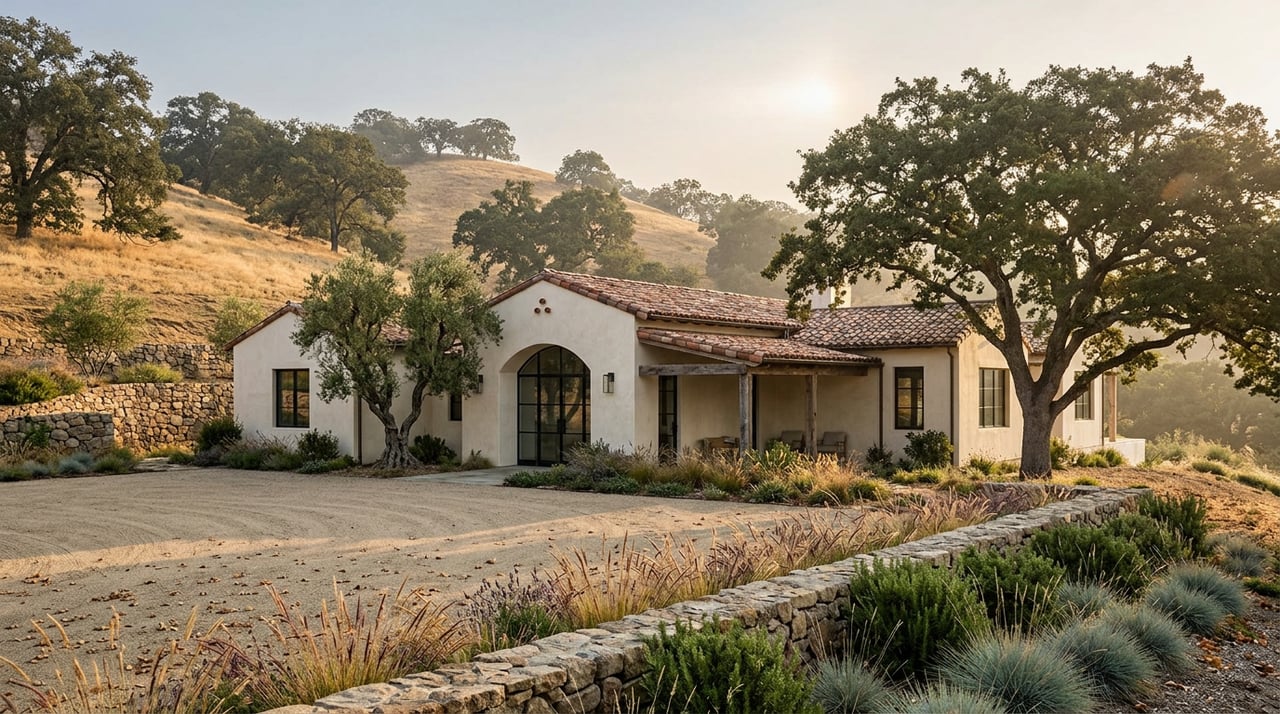
"There is a huge tree at the top of a hill, from where the view is amazing," one hiker wrote after finishing the loop through Byrne Preserve, the 55-acre stretch of oak woodland and grassland tucked along the upper end of Altamont Road. The tree sits at the high point of the Artemas Ginzton Path, and on a clear day the view runs from Stanford to NASA Ames to the San Francisco Bay.
Walk back down that hill on the first Saturday of September and you land in a different kind of scene entirely. On September 5, 2026, the dirt lot at Westwind Community Barn next door filled with the smell of Capelo's BBQ, the sound of Sidesaddle & Co. playing live bluegrass, and a dance caller talking a crowd of neighbors through steps most of them had never tried. The Cookies n' Cream SJ truck handled dessert. The event was free. It was called the Hoedown, and it is the closest thing this town has to a block party.
That pairing, a quiet hilltop trail and a loud community barbecue, sitting on adjoining parcels, is not a coincidence. It is the clearest evidence of something true about how Los Altos Hills actually functions: the town has no commercial center, no Main Street, no plaza where people bump into each other running errands. What it has instead is a horse barn that the Town itself owns, and that barn does the social work a downtown would do anywhere else.
A Town Built Not to Cluster
Los Altos Hills was designed this way on purpose. The town's own description of its land use policy is direct about it: large-lot zoning exists specifically to preserve open space, and much of what residents experience as the town's rural character comes from land that was donated rather than developed. Byrne Preserve itself is a product of that pattern, assembled from a 50-acre gift by Albert M. Byrne to the Nature Conservancy and a further 25 acres from Countess Betty Byrne Dezahara.
A town that zones against clustering doesn't get a natural gathering spot by default. It has to designate one. Los Altos Hills designated Westwind.
The Barn That Became the Square
Westwind Barn has a specific origin story, and it explains why it ended up carrying this weight. The 15-acre property was purchased by Countess Margit Bessenyey as a breeding and training facility for her Hungarian horses, and she worked out of it with Linda Tellington-Jones, the trainer whose techniques are still taught in clinics today. In 1976, the Countess donated the site to the town outright. It sat as a working equestrian facility for decades until a 2009 renovation brought it up to current standards: a dressage court, a full jumping arena, a round pen built with extra-tall panels to reduce injury risk.
None of that history required the barn to become a public party venue. A private buyer could just as easily have kept it as a boarding operation with no civic role at all. Instead, the town built its calendar around it, and the Hoedown is the visible result.
Two Seasons, One Rhythm
The Hoedown isn't the town's only flagship gathering. It has a spring counterpart, the annual Town Picnic at Purissima Park, and the two events read like bookends built from the same template.
| Spring: Town Picnic | Fall: Hoedown | |
|---|---|---|
| Location | Purissima Park | Westwind Community Barn |
| Food | Barbecue lunch, beer, wine, ice cream | Capelo's BBQ, Cookies n' Cream SJ |
| Entertainment | Live entertainment, games | Sidesaddle & Co. bluegrass, dance caller, horse expo |
| Horsemen's Association role | Pony rides | Volunteer table |
The Los Altos Hills Horsemen's Association shows up at both, which is its own small clue. This is a nonprofit built around keeping horsemanship alive in the community, and its calendar tracks the town's two biggest social dates of the year almost exactly. When an all-volunteer horse group structures its own year around your party schedule, the party schedule is doing more than entertaining people. It's holding the community's rhythm together.
The Programs That Never Stopped Running
What separates Westwind from a one-weekend-a-year event space is what happens there the other 363 days. Victoria Dye Equestrian runs the barn's day-to-day lesson programs, English and Western, for riders who don't own a horse, with a 10 percent discount built in for town residents. The Westwind Riding Institute, operated through Santa Clara County 4-H, has been offering riding lessons to children with physical disabilities since October 1978, meeting Monday afternoons through fall, winter and spring. Add Victoria Dye Equestrian's own two horse shows a year, and the town's five Westwind-based community events, and the barn is functioning as year-round infrastructure, not a seasonal backdrop.
Almost fifty years of continuous programming at one site is unusual for a town this size. It means the barn isn't propped up for a single popular event and left dormant the rest of the year. The Hoedown works because the barn was already full of people who ride there every week.
The Trail That Starts Where the Party Ends
The other half of the pairing is Byrne Preserve itself, and it deserves more attention than "adjacent open space" gives it. The Artemas Ginzton Path loops 3.1 miles through the preserve with about 505 feet of elevation gain, rated easy by trail reviewers and consistently marked as dog-friendly on leash. It threads through bay and oak woodland, follows the headwaters of Moody Creek, a tributary that eventually reaches Adobe Creek and the Bay, and climbs to that hilltop oak that stops most hikers in their tracks.
The parallel with Westwind is exact. Byrne Preserve exists because two private landowners gave their acreage away rather than sell it. Westwind exists because Countess Bessenyey did the same thing with hers. The two biggest pieces of shared civic space in this corner of town both trace back to the same kind of decision: someone with land chose to hand it to the public instead of a developer. That's not a coincidence of geography. It's the mechanism by which a town with almost no public budget for parks ended up with a barn, a preserve, and a trailhead all sitting on the same fence line.
The One Event That Doesn't Happen Here
There's a useful contrast at the edge of this pattern. The town's fall Clean Up Day, the resident-only bulk disposal event run with GreenWaste Recovery, lands on October 24, 2026, and it happens at Foothill College's parking lot, not at Westwind. That's not a small detail. It shows the barn's role is specifically social. When the town needs to run a logistics-heavy operation, hauling yard waste and old appliances, it goes somewhere with parking lot capacity built for that job. When it wants people to actually gather, it goes back to the barn.
That split is the whole argument in miniature. Los Altos Hills has plenty of places to handle its practical business. It has exactly one place built for its community to show up, eat something off a food truck, and dance badly to a caller's instructions. The town didn't inherit that arrangement. It was built out of two gifts of land, decades apart, that happened to sit next to each other.
If you already live here, that's probably not news you needed spelled out. But it's worth knowing why the first Saturday in September feels the way it does, and why the quiet hilltop a quarter mile up the trail belongs to the same story as the bluegrass band in the parking lot below it.
Straser Silicon Valley is based in Menlo Park and works across the Peninsula, including Los Altos Hills, where we spend as much time following the town's calendar as its comps. If you're curious about what else shapes daily life here, or you're weighing a move to this part of the hills, reach out and we'll talk through what we're seeing on the ground.