If you crave privacy, land, and panoramic views without straying far from Silicon Valley, Los Altos Hills may already be on your shortlist. Choosing the right estate market is a big decision, especially when you are weighing lifestyle tradeoffs, development potential, and long-term value. In this guide, you will get a clear picture of how Los Altos Hills actually lives, how its zoning affects what you can do with a property, and how it compares to nearby estate towns. By the end, you will know if this unique foothill community aligns with your goals. Let’s dive in.
What defines Los Altos Hills
Los Altos Hills is a very low-density, predominantly residential town in the Santa Cruz Mountains foothills on the Peninsula. The community intentionally preserves a rural and open-space feel, with no true commercial core inside town limits. Most residents rely on nearby Los Altos, Palo Alto, and Mountain View for shopping, dining, and services.
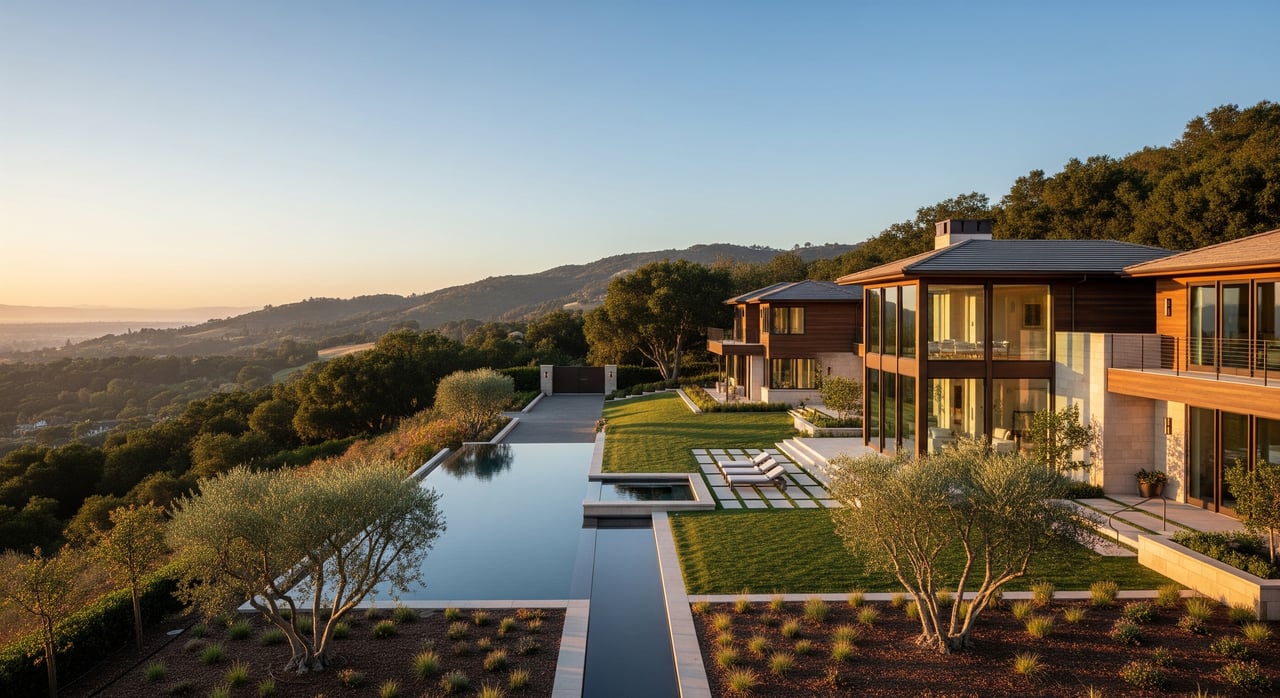
The town is small, with under 9,000 residents, and offers a quieter, more private lifestyle than typical suburban areas. Properties are often estate-sized, with large lots of about an acre or more, long driveways, mature landscaping, and hillside or Bay views. You will find ranch, mid-century, contemporary, and modern architectural styles throughout.
Why buyers choose it: privacy, large parcels, view corridors, low traffic, and a strong emphasis on open-space conservation. If you want a retreat feel that still connects to major tech hubs, Los Altos Hills delivers.
Zoning and development: what it means for you
Town policy favors very low-density residential use and open-space protection. Many zoning districts require minimum lot sizes of about one acre or greater. Building coverage, height, grading, and design controls are stricter than in typical suburbs to protect views, reduce visual impact, and manage slope stability.
If you plan to build or significantly remodel, expect a more involved review process. New homes, large additions, or major grading often require site plan review, geotechnical studies, and tree protection plans. Projects on steeper sites draw added scrutiny.
Bottom line for buyers: limited subdivision potential and careful review of large accessory structures or new construction. If you intend to expand beyond current improvements, budget for planning, engineering, and longer timelines.
Daily life and convenience
You will not find a downtown inside Los Altos Hills. That is by design. Most residents head to Los Altos Village, Palo Alto, Mountain View, or Portola Valley for groceries, restaurants, boutique retail, and medical services. Proximity to Los Altos Village is a frequent plus compared to more remote foothill towns.
Roads are primarily two-lane and winding. Public transit is limited, so a private vehicle is essential. The nearest Caltrain stations are in Mountain View and Palo Alto, and Highway 280 and 101 provide freeway access after local roads. Commutes to Palo Alto, Mountain View, or Cupertino are common, but can take longer than from flatter suburbs.
Schools and enrollment
Public school assignments typically fall within Los Altos School District for K–8 and Mountain View–Los Altos Union High School District for high school, depending on the parcel. Many private schools are nearby. Boundaries can change over time, so confirm current maps with the districts for any property you consider.
Utilities and estate services to verify
- Water sources vary. Many homes rely on private wells, while some areas are served by local water districts such as Purissima Hills Water District. Always verify the water source, capacity, and any district rules for the address.
- Many properties use septic systems. Inspect condition and permitting history, and confirm any designated replacement area.
- Electricity and gas are typically provided by regional utilities. Check service capacity for large remodels, EV charging, or pool equipment.
- Law enforcement is provided under county contract, and fire protection is delivered through county and district services. Wildfire preparedness and defensible space requirements are important parts of ownership.
- Expect private driveway maintenance, significant landscaping, and routine vendor coordination for pools, irrigation, and hillside drainage.
Natural hazards and insurance considerations
Wildfire risk is a material factor in many foothill locations, including Los Altos Hills. Defensible space, brush clearance, and ongoing mitigation are common requirements. Insurance availability and premiums can be affected, so obtain quotes early in your due diligence.
Hillside terrain can introduce slope stability and erosion concerns. Large projects usually need geotechnical and soils reports, and existing improvements such as foundations and retaining walls should be inspected. As with all Bay Area locations, seismic risk is a baseline consideration for building standards and retrofit decisions.
Environmental rules may limit grading, tree removal, or habitat disturbance, especially on steep slopes or in sensitive areas. When financing, some lenders consider wildfire and earthquake coverage as part of their requirements. Planning early for insurability and mitigation will streamline your path to close.
Market positioning and value drivers
Los Altos Hills sits at the high end of Peninsula residential markets. It competes with Woodside, Portola Valley, and parts of Palo Alto and Menlo Park for buyers seeking estates, privacy, and land. Scarcity of large parcels and deliberate low-density zoning tend to support long-term value for well-situated properties.
Key value drivers include lot size, view quality and privacy, access to tech job centers, school assignment, property condition, and what the zoning and site can reasonably accommodate. Inventory is limited by design. Major estate sales occur less frequently, and highly customized properties can take longer to find the right buyer. In competitive cycles, exceptional listings still move quickly.
Typical buyers are executives, entrepreneurs, and families who want space for hobbies such as gardening, poolside living, sport courts, or small vineyards, while staying within reach of Silicon Valley centers. Maintenance costs and hazard mitigation can be higher on hillside estates, which is an important part of your total cost of ownership analysis.
Los Altos Hills vs. nearby estate towns
Los Altos Hills vs. Woodside
Los Altos Hills provides a quieter, low-density environment close to Los Altos Village and major job centers. Woodside often features larger ranch-style parcels and a stronger equestrian tradition. On comparable acreage, Woodside can carry higher prestige or pricing depending on micro-location and amenities.
Los Altos Hills vs. Portola Valley
Both towns protect rural character and open space. Portola Valley has small commercial areas that add a village feel in certain neighborhoods. Los Altos Hills leans more fully residential with few services inside town limits, which many owners prefer for privacy.
Los Altos Hills vs. Palo Alto west hills
Palo Alto’s west hills deliver large homes and views with more municipal services and closer commercial convenience. Los Altos Hills offers a more rural setting, larger average lots, and less through-traffic. The right choice comes down to how you balance privacy against everyday convenience.
Is it the right fit? A quick decision checklist
Use this list to frame your priorities before you tour properties:
- Privacy and land are top priorities for you, even if it means driving a few extra minutes for daily needs.
- You value views, mature landscaping, and a retreat feel over walkable urban amenities.
- Your development goals align with low-density zoning and design controls, and you are comfortable with a more detailed permit process.
- You are prepared to manage or outsource hillside and estate-level maintenance such as landscaping, drainage, and private road upkeep.
- You plan to verify water source and septic systems and are comfortable with well and septic ownership where applicable.
- You accept wildfire and seismic risk as part of foothill living and will invest in mitigation and proper insurance.
- School options meet your needs, and you will confirm current boundaries with the districts for any address.
- Commute patterns to Palo Alto, Mountain View, or Cupertino work with your schedule given local road geometry.
Buyer due diligence: what to confirm
- Verify parcel zoning, permitted uses, and any recorded easements or open-space covenants.
- Confirm water source. For wells, review well logs, yield tests, and water quality. For water districts, confirm service parameters.
- Confirm septic vs. sewer, obtain a septic inspection and file history, and validate space for replacement if needed.
- Order geotechnical and soils reports for planned additions or new construction. Review slope stability and any seasonal seepage.
- Determine wildfire severity zone designation, defensible space rules, and local brush abatement requirements.
- Review tree, grading, and view-related ordinances that could affect design or landscaping.
- Check electrical service capacity, planned upgrades, and irrigation supply needs for large landscaping.
- Obtain early quotes for homeowner, wildfire, and earthquake insurance.
- Clarify access, easements, and private road maintenance responsibilities or agreements.
- Confirm current school boundary maps with the relevant districts.
- Analyze comparable sales and time on market using recent MLS and county transfer data.
How Straser Silicon Valley helps you buy well
When you pursue an estate in Los Altos Hills, the right team saves you time and helps you avoid costly missteps. Straser Silicon Valley pairs local market intelligence with white-glove execution to guide you from first tour through close. You get strategic pricing and market analysis, disciplined negotiation, and access to the broader Compass and Jones Fridman / Forster Jones International networks for reach and perspective.
We coordinate the moving parts that matter to high-stakes hillside acquisitions. That includes referrals to trusted inspectors and engineers, guidance on zoning paths, and a focused plan to secure insurability and vendor support. The result is a confident purchase with clarity on what the property can become.
If Los Altos Hills is your ideal backdrop for a private Peninsula retreat, let’s talk about your brief and timeline. Request a white-glove consultation with Straser Silicon Valley.
FAQs
Does Los Altos Hills have a downtown or shopping district?
- No. The town is primarily residential with no commercial core, so residents typically shop and dine in nearby Los Altos, Palo Alto, and Mountain View.
Are Los Altos Hills homes on city water and sewer?
- Many properties use private wells and septic systems, while some parcels are served by local water districts. Always verify utilities for a specific address.
How does wildfire risk affect buying in Los Altos Hills?
- Wildfire risk can influence insurance availability, cost, and required mitigation. Obtain quotes early and plan for defensible space and ongoing brush management.
Can you subdivide or add large accessory structures in Los Altos Hills?
- Zoning favors low density and open-space protection, which limits subdivision potential and subjects large projects to detailed review and geotechnical requirements.
What is the commute like from Los Altos Hills to tech hubs?
- Driving is primary. Reaching freeways requires local winding roads, and commute times to Palo Alto, Mountain View, or Cupertino can be longer than from flatter suburbs.
Which public schools serve Los Altos Hills addresses?
- Many parcels are served by Los Altos School District for K–8 and Mountain View–Los Altos Union High School District for high school. Confirm specific boundaries with the districts.