Ride a bike down Altamont Road on a Saturday morning and you may have to stop. Not for a car, not for a stop sign, but for a horse. Under the town's own pathway rules, cyclists yield to equestrians, and pedestrians yield to them too. It is not a suggestion posted at a trailhead. It is written policy for the Los Altos Hills Pathway System, and it is the kind of detail that tells you more about this town than any listing photo ever could.
Most hillside communities in Silicon Valley talk about horses the way they talk about redwoods or fog: a nice bit of local color. Los Altos Hills built its actual right-of-way hierarchy around them, and a small, aging volunteer group has spent more than fifty years making sure that hierarchy survives contact with a very different kind of new construction.
The rule nobody had to vote on again
The town's official pathway guidance still leans on what it calls the three C's: common sense, courtesy, communication. In practice that means bicyclists yield to horseback riders and pedestrians, and pedestrians yield to horseback riders. It is a small thing until you are the one on two wheels coming around a blind curve on Fremont Road and realize the animal ahead of you technically has priority.
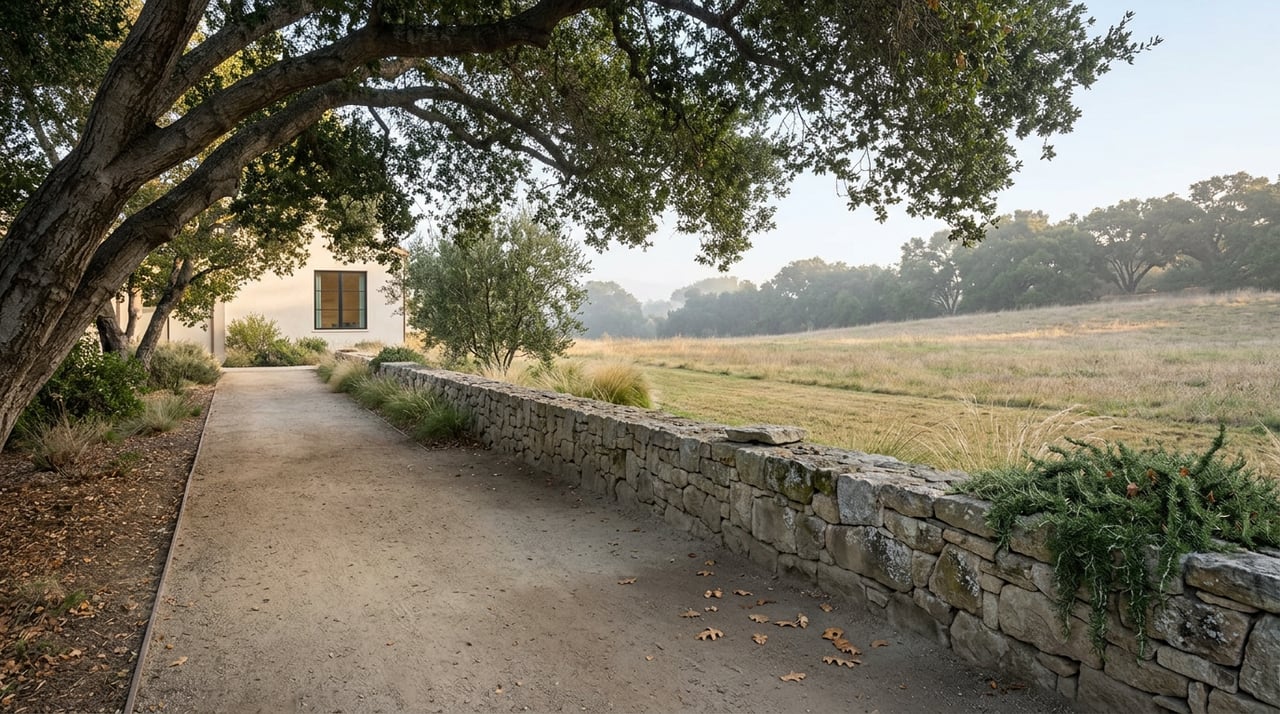
That rule exists because the pathways were never just sidewalks. The town's own pathway page describes the system as serving school children, walkers, runners, cyclists and horseback riders, with unpaved sections specifically built to connect stables, open space preserves and the Los Altos Hills Town Arena on Purissima Road. The paths are infrastructure for an activity most neighboring towns stopped accommodating decades ago.
The zoning fight that built it
That infrastructure did not happen by accident. In 1970, a handful of residents incorporated the Los Altos Hills Horsemen's Association specifically to push back against a town council that was considering what horse owners at the time called no-horse subdivisions. One founding member later put the stakes plainly, arguing that neighboring Los Altos had lots too small to keep a horse on and that Los Altos Hills risked following the same path.
The association's founding mission still reads like a legal brief: to encourage the acquisition, building, maintenance and supervision of the pathways system, and to represent equestrian interests in front of the town's own leadership. LAHHA members have since served on the Pathways Committee, the Planning Commission and the City Council, and the group still shows up at hearings whenever a project might affect a trail easement. The board meets the first Monday of most months at the Parks and Recreation building next to Town Hall, a detail so unglamorous it is easy to miss how much leverage it represents. More than five decades of quiet committee attendance is how a hobby becomes zoning.
Three barns, three different versions of the same town
The town's horse culture is not one facility. It is three, and each one serves a different resident.
| Stable | Location | What it's known for |
|---|---|---|
| Westwind Community Barn | Altamont Road | Town-owned boarding and lesson barn, managed day to day by Victoria Dye Equestrian |
| Rancho de las Reinas | Page Mill Road | Western riding and relaxed trail rides, geared toward beginners |
| Windy Hill Equestrian at Fremont Hills Country Club | Fremont Road | Members-only hunter jumper program with a full show and training track |
Westwind is the one with the origin story. The Countess Margit Bessenyey bought the property to breed and train Hungarian horses and worked there with Linda Tellington-Jones, a trainer whose techniques are still taught in clinics nationally. The Countess donated the site to the town in 1976. More than three decades later, in 2009, the barn underwent a major renovation that turned it into the boarding and training facility it is today, and it now sits directly against the Byrne Preserve, so a boarded horse can go from stall to open trail in a few hundred feet.
What it actually costs to keep the lights on
None of this runs for free, and the numbers are smaller than you might expect for a town built on multimillion-dollar lots. Board at Westwind has historically run in the range of $385 to $775 a month, depending on the type of stall and care package. That is not luxury pricing. It is closer to what you would pay for a serious hobby anywhere in the region, which is part of why the barn leans on fundraising rather than boarding fees alone to cover upkeep. The annual Hoedown, held at the barn each fall, has long served as a fundraiser for the 4-H program and for barn preservation, alongside a spring Town Picnic where LAHHA volunteers run pony rides for kids who have never sat on a horse in their lives.
The math only works because a nonprofit made up entirely of volunteers keeps showing up to do it. That is a fragile arrangement by design, and it depends on enough people caring enough to keep caring.
The dormitory house problem
Here is where the story gets more interesting than a barn tour. Longtime members of the association have said openly that the culture they built the pathway system to protect is thinning out, not because the town changed its rules, but because the people moving in are building differently. One past LAHHA president put it this way: new residents want the country feel, then build homes with tennis courts and swimming pools and no room left over for so much as a sandbox, let alone a paddock.
That is not a complaint about newcomers. It is an observation about what happens when the legal scaffolding for a way of life outlives the daily habits that used to fill it. The pathways are still there. The yield rule is still on the books. The Town Arena still hosts riders. But the ratio of households that actually use any of it for a horse, rather than for a morning jog past someone else's horse, keeps shifting. The infrastructure of Los Altos Hills is arguably more equestrian than the town itself is anymore, and that gap is the most honest thing you can say about the place right now.
Where to see it before it changes further
If you want to see the culture in its most concentrated form, mark September 5, 2026, from 3:00 to 7:30 p.m. That is when Westwind Community Barn hosts this year's Hoedown, the same fall fundraiser that has anchored the barn's calendar for years. Past editions have featured a barbecue food truck from Capelo's, live bluegrass from Sidesaddle & Co, and equestrian exhibitions in the upper arena from Victoria Dye Equestrian starting around 4:30 in the afternoon. Expect a similar shape this year, built around the same barn, the same arena, and very likely a similar crowd of people who still think a horse belongs in a town this size.
Walk the pathway behind your own street sometime this fall and you may pass a rider before you pass another car. That is not nostalgia. It is town policy, funded by a barn dance, defended by a volunteer board that meets in a small building near Town Hall on the first Monday of the month. How long that keeps working is an open question. For now, in Los Altos Hills, the horse still goes first.
If you are weighing what a property here can actually support, from pathway easements to the kind of grounds that keep a paddock viable, Straser Silicon Valley can walk you through it with the same local specificity as everything above. Request a white-glove consultation whenever you are ready to talk specifics.