Menlo Park is situated at the center of the Mid-Peninsula, characterized by tree-lined streets, established neighborhoods, and proximity to major employers. When comparing Menlo Park vs. Redwood City and Menlo Park vs. Atherton, each community offers its own personality, pace, and built environment. For buyers and sellers seeking clarity, the distinctions become especially important as they consider lifestyle priorities, neighborhood qualities, and long-term value.
This guide examines how Menlo Park differs from its two neighboring cities in ways that matter most when evaluating the local real estate landscape.
Downtown Personality and Everyday Atmosphere
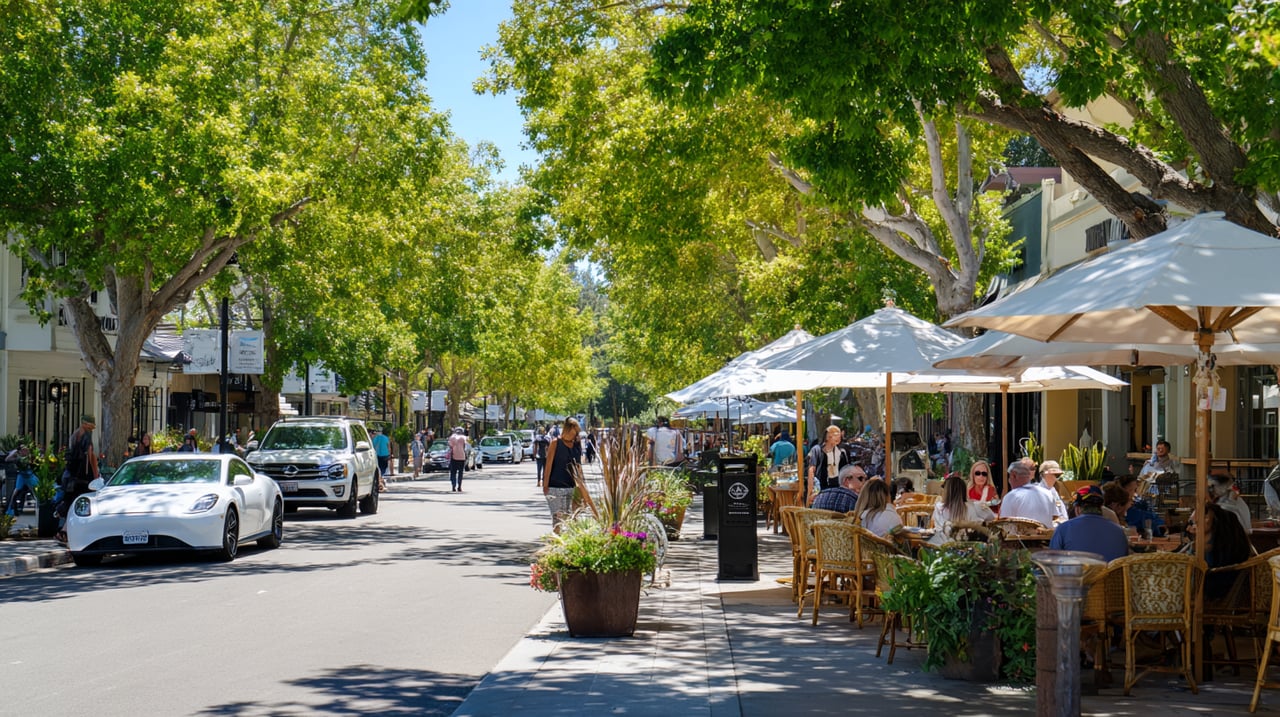
Menlo Park’s downtown along Santa Cruz Avenue is compact, walkable, and curated, offering cafés, bookstores, and independent retailers that give the area a neighborhood-focused feel. The sidewalks feel calm even during peak hours, and many long-standing businesses contribute to a sense of continuity. Outdoor seating, shaded blocks, and convenient parking encourage a relaxed pace.
Redwood City’s downtown, by contrast, is larger, busier, and more entertainment-oriented. It features a performing arts center, a major movie theater, and an expanding dining scene that draws visitors throughout the region. Atherton offers no traditional downtown at all. Its estate-style layout and zoning preserve privacy and space, so residents typically rely on the commercial options in Menlo Park or Redwood City for daily errands and dining.
Neighborhood Layout and Architectural Identity
Menlo Park features a mix of historic cottages, ranch homes, contemporary builds, and charming pre-war residences. Areas like Allied Arts, Linfield Oaks, and Menlo Oaks provide distinctive architecture, leafy streets, and a comfortable scale that appeals to buyers wanting character without isolation. Many homes in this area are modest in size compared to those in neighboring Atherton, but they are thoughtfully designed and sit on well-established lots.
Redwood City encompasses a diverse array of neighborhoods, ranging from suburban tracts to hillside districts with expansive views across the Peninsula. The architecture is more varied, extending from early-20th-century homes near Mount Carmel to sleek residences closer to the emerging transit center. Atherton is defined by some of the largest lots in the region, with gated estates, extensive landscaping, and one of the lowest housing densities in California.
Community Amenities and Gathering Spaces
Menlo Park maintains well-designed parks, a popular civic center, and places like Burgess Park where residents gather for recreation or community events. Its trail connections, sports fields, and public facilities accommodate daily activity for residents who appreciate structured amenities without large crowds.
Redwood City offers more expansive public programming, including music series, seasonal festivals, and events centered around Courthouse Square. Atherton, meanwhile, relies on its quiet residential layout and private club access but offers fewer public gathering spaces. For those comparing Menlo Park vs. Redwood City, Menlo Park provides a more peaceful community environment, whereas Redwood City delivers more large-scale public events.
Proximity to Business and Innovation Hubs
Menlo Park sits immediately adjacent to key employment centers, including Meta’s headquarters and Stanford University. The ease of reaching Sand Hill Road, Palo Alto, and the Stanford Research Park is one of the city’s defining strengths. For buyers and sellers who frequently commute or collaborate with organizations nearby, Menlo Park’s location offers unmatched convenience.
Redwood City also functions as a growing tech hub, with companies clustered near the transit corridor and the revitalized downtown area. Its employment base continues to expand, but sits slightly farther from the Sand Hill Road venture capital corridor. Atherton residents benefit from a similar proximity to regional employers, but its residential layout keeps business activity outside the town’s borders.
Lifestyle Pace and Local Character
Menlo Park features a balanced pace: active but not overwhelming, polished but not ostentatious. Sidewalk cafés, weekend markets, and community programs shape a lifestyle that appeals to those seeking sophistication rooted in neighborliness. The local character is reflected in long-term residents who value stability and regional involvement.
Redwood City’s pace feels livelier and more urban, with nightlife and public programming contributing to an active environment. Atherton offers a lifestyle focused on privacy, tranquility, and estate living, prioritizing space over walkability or public engagement. For those comparing Menlo Park vs. Atherton, Menlo Park offers more connections to community amenities and public spaces.
Housing Options and Residential Appeal
Menlo Park’s housing stock is diverse, offering buyers a range of choices across size, style, and budget tiers. This range caters to transitional buyers, downsizers, and households seeking long-term residences in established neighborhoods. Many homes have undergone significant renovations, elevating both curb appeal and functionality while retaining their architectural charm.
Redwood City offers a broader range of price points influenced by its size and diversity of neighborhoods. Its hillside communities appeal to those seeking views, while its central neighborhoods cater to buyers looking for convenience and vibrant surroundings. Atherton’s housing market consists almost exclusively of large luxury estates. Comparing Menlo Park vs. Atherton, Menlo Park delivers more versatility and accessibility.
Long-Term Growth and Market Position
Menlo Park’s ongoing desirability is shaped by its central location, stable housing inventory, and strong connection to innovation hubs. The city has shown steady market performance driven by buyers who value its combination of sophistication, convenience, and neighborhood identity.
Redwood City continues to grow through redevelopment and increased density, attracting buyers who seek urban energy and proximity to transit. Atherton’s market remains defined by scarcity, exclusivity, and global demand for estate properties. Menlo Park sits between the two extremes, offering the balance that many buyers seek.
Working With Straser Silicon Valley
For sellers deciding how to position their home relative to Menlo Park vs. Redwood City or Menlo Park vs. Atherton, partnering with an expert Silicon Valley real estate agent who understands the subtle differences between these communities makes a measurable impact. Straser Silicon Valley stands out with a strategic listing process, luxury and neighborhood specialization, and masterful negotiation skills that consistently secure the highest possible sales price. Their white-glove concierge service and experienced professional staff streamline preparations, while proactive communication ensures that every detail is handled efficiently.
Ready to Make Your Move?
Straser Silicon Valley provides the guidance, market intelligence, and strategic visibility needed to navigate the Peninsula’s most competitive neighborhoods. If you’re preparing to buy or sell in Menlo Park, Redwood City, or Atherton, their team is ready to assist with precision and expertise.
Reach out today as your next key step toward homeownership in Menlo Park.