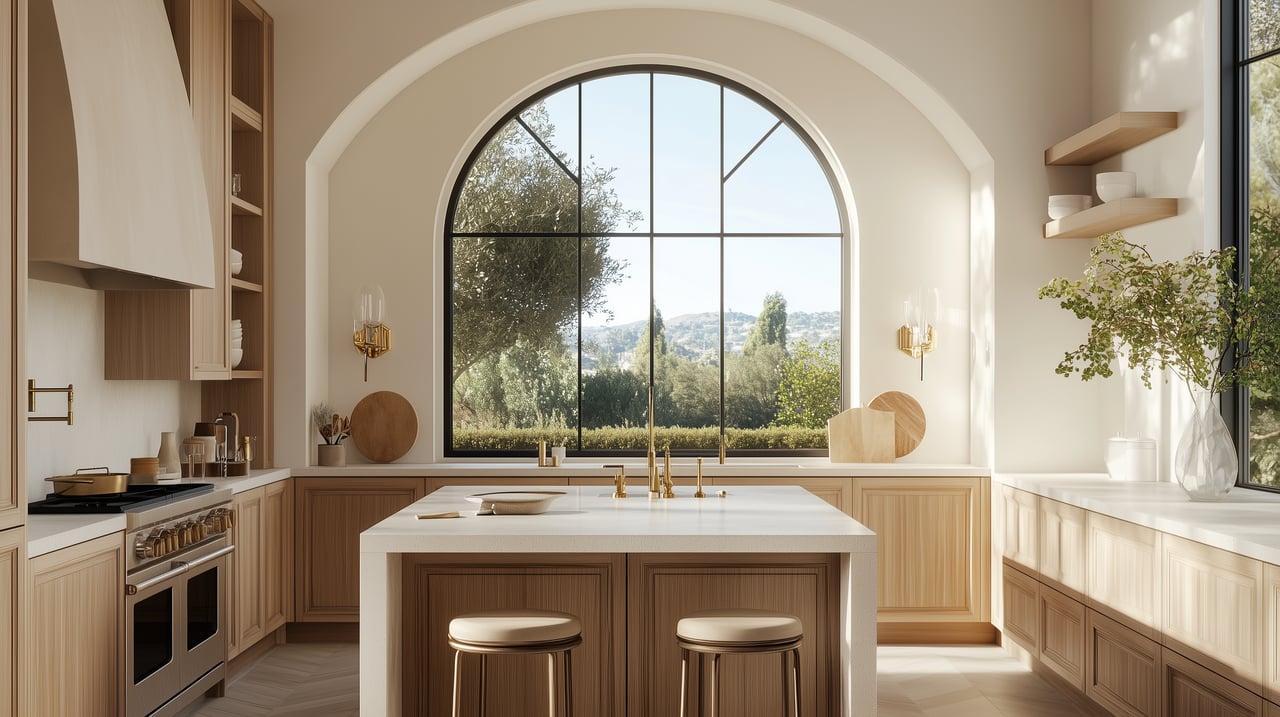
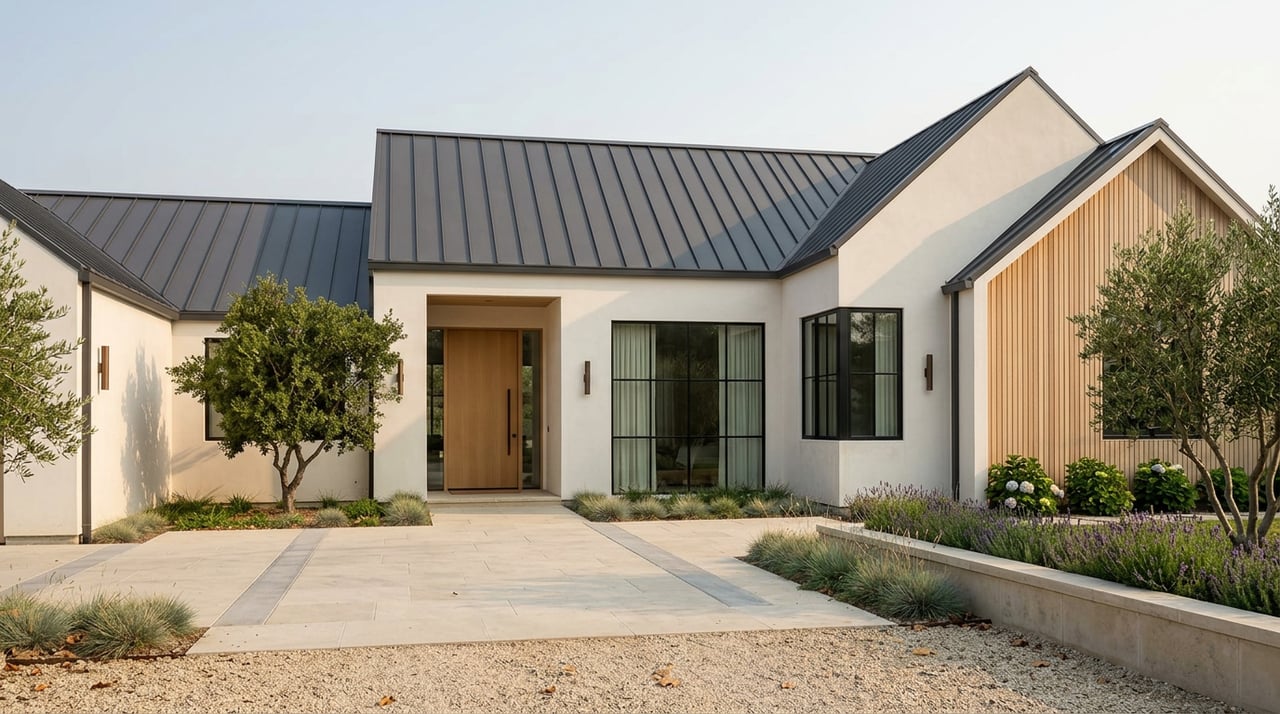
If you love a home that feels like it was placed exactly where the land wanted it, Los Altos Hills will speak your language. Here, one-acre lots, rolling slopes, and bay-to-mountain vistas shape almost every design choice. Whether you are browsing listings or planning a build, understanding the styles that define these estates will help you see more than finishes. You will learn how architecture, siting, and town rules work together to unlock views, privacy, and value. Let’s dive in.
Why Los Altos Hills looks this way
Los Altos Hills preserves a semi-rural feel on purpose. The Town’s General Plan and Residential‑Agricultural zoning set a minimum lot size of one acre and emphasize careful siting to protect ridgelines and mature trees. You can see this policy direction in the General Plan’s housing chapter.
To manage scale, the Town limits building size and hardscape through Maximum Floor Area and Maximum Development Area calculations. On a relatively flat one‑acre lot, MFA is commonly shown around 6,000 square feet and MDA around 15,000 square feet, though actual allowances are calculated per parcel. These rules directly shape where you can place the house, terraces, pool, motor court, and pathways. You can review the Town’s MFA/MDA worksheets before you bid or design.
Very large homes have an extra layer of review. The Estate Homes Ordinance applies to homes 10,000 square feet or larger and adds height caps, deeper setbacks, and required landscape screening. If you are considering a grand Mediterranean or European‑style build, study the Estate Homes Ordinance early.
Because many properties sit on hillsides, the Town evaluates visual and ridgeline impacts. Second‑story additions and larger projects often require story poles and public review to test perceived height and bulk. The Town’s Story Poles Policy explains when and how this occurs.
Environmental factors also guide design. Steep slopes, soils, and riparian corridors influence buildable area and can add geotechnical and drainage costs. Wildfire considerations have grown more prominent as the Town updates how it applies state maps. If you are weighing defensible space, siding, or roof choices, the Wildfire Hazard Severity Zone Maps are a helpful starting point.
Finally, redevelopment potential is stronger when you account for accessory units and energy rules at the outset. Updated ADU standards can create guest or multigenerational options on larger lots. Review the Town’s Accessory Dwelling Units page to understand size, height, and placement.
Five defining estate styles
Modern and contemporary estates
Modern estates lean into clean geometry, glass, and seamless indoor‑outdoor living. You will often see floor‑to‑ceiling windows, pocketing or folding glass walls, and terraces that step down the slope. Interiors favor open kitchens, wet bars or wine rooms, and minimalist finishes.
Where these homes shine: view lots. Designers place main living spaces and the primary suite on the view side to capture panoramas, while service areas tuck into the uphill side for privacy. This approach aligns with common hillside patterns documented in design case studies.
What to watch: privacy and glare. Glass-heavy facades benefit from L‑shaped plans, screened glazing, and landscape buffers. The Town also limits reflective finishes, which affects metal roofing and light cladding on ridge-visible sites. If you love standing‑seam roofs, check the Metal Roofing Policy for acceptable colors and reflectivity.
Mediterranean, Tuscan, and Spanish revival
Stucco walls, clay‑tile roofs, arched openings, and shaded loggias define these homes. Many include formal courtyards, fountains, and layered terraces that create outdoor rooms. On acreage, you can grade discreetly to fit a pool, lawns, and a motor court without crowding the residence.
Where these homes shine: large, private parcels with space for formal gardens and entertaining. Terraced landscapes connect upper loggias to lower patios or pool decks for an easy flow.
What to watch: scale and development credits. Substantial homes that push the 10,000 square foot range are more likely to trigger the Estate Homes Ordinance. Hardscape and outdoor amenities count toward development limits, so confirm what your terraces, courts, and driveways mean for MDA under the Development Area Policy.
Mid‑century and California ranch
Low, horizontal profiles, deep eaves, and broad sliders link these homes to the landscape. Many original ranch and mid‑century houses date from the 1950s to 1970s and sit quietly into the slope. Remodeled examples often keep the low silhouette while opening walls to views and adding a walk‑out lower level.
Where these homes shine: lots where you want to limit visual height at the ridgeline while still improving view capture. A single‑story profile can reduce perceived bulk from the street and sometimes simplifies the story‑poles process compared with a full two‑story mass.
What to watch: additions and glazing. If you plan a second‑story addition, expect visual review and story poles. Upgrading windows and doors to larger openings can transform indoor‑outdoor flow, but check how those changes affect MDA and the placement of any covered terraces under current worksheets.
Contemporary farmhouse and modern‑transitional
This style blends gabled rooflines, generous porches, and board‑and‑batten or shiplap siding with modern floor plans. Inside, you will find oversized kitchens, warm finishes, and large sliders that open to patios and pool terraces. The look reads clean, rural, and tailored.
Where these homes shine: acreage where a pastoral identity fits the setting. The style bridges traditional charm and modern function for buyers who want something softer than a glass box.
What to watch: roof finishes and fire considerations. Metal roofs are common in this style but must meet the Town’s reflectivity limits. Confirm your material palette against the Metal Roofing Policy, and plan defensible space and ignition‑resistant materials early using the Town’s wildfire resources.
Traditional and European eclectic
Think formal symmetry, taller or hipped roofs, and masonry or stone accents. You might see broad terraces, axial entry walks, and defined gardens that set a stately tone. These homes are less common than modern or Mediterranean estates but do appear on larger holdings.
Where these homes shine: privacy‑forward sites with long drives and space for screening. Formal entertaining areas often align with lawns, courts, and terraces.
What to watch: massing and screening. Larger traditional homes can rise quickly in height and perceived bulk. If plans approach the Estate threshold, expect deeper setbacks and a robust landscape plan. Coordinate your outdoor program with MDA early under the Development Area Policy.
Style, site, and lifestyle: how choices work together
Orientation for views and privacy
Most successful hillside homes put the kitchen, great room, dining, and primary suite on the view side. Secondary bedrooms and service zones usually sit uphill or along the sheltered edge. On steeper sites, guest suites, media rooms, or gyms live on a walk‑out lower level that opens to a patio or pool, as illustrated in well‑documented hillside case studies.
Crest siting vs. embedded siting
Building right on a crest can produce near‑panoramic views, but it also increases visibility from roads and neighboring properties and can invite closer review. Setting the home slightly below the crest or stepping it into the slope helps protect the ridgeline and can create quiet courtyards. If you expect a second story or taller massing, plan for the Story Poles Policy as part of your schedule.
Indoor‑outdoor continuity
Whether your style is modern or Mediterranean, large openings to covered terraces extend living space and make outdoor rooms usable most of the year. Continuous terrace lines, outdoor kitchens, and shaded loggias are signature California moves that feel at home in Los Altos Hills. Confirm how much hardscape you can build and where it can go under the Development Area Policy and your parcel’s MDA.
Materials, glare, and fire resilience
Metal roofs and light claddings look crisp in the sun, but reflectivity controls limit glare into the valley. Review the Town’s Metal Roofing Policy when selecting finishes that face public views. Also account for ignition‑resistant materials and defensible landscape zones early using the Wildfire Hazard Severity Zone Maps.
Value insights for buyers and sellers
Academic research shows that high‑quality views create measurable price premiums. The exact premium varies by view type, quality, and scarcity, but the relationship is clear in hedonic price studies like this widely cited paper. In Los Altos Hills, unobstructed bay or valley vistas, strong privacy, and seamless indoor‑outdoor plans tend to command the most interest.
Published median prices for the town can swing month to month due to the small number of high‑end sales. When you need precision, rely on fresh, style‑specific comps and on‑the‑ground market reads rather than a single aggregator snapshot.
Redevelopment potential drives value too. MFA and MDA allowances, ADU rights, and the Estate Homes Ordinance influence whether you can expand or reprogram a property. Start with the Town’s MFA/MDA worksheets and Accessory Dwelling Units page to stress‑test your plans.
Finally, site complexity matters. The General Plan notes that steep slopes, unstable soils, and seismic conditions can increase construction budgets through special foundations, retaining walls, and engineered drainage. Wildfire‑map updates have also raised classifications for some parcels, which can add mitigation steps and disclosures. Pair site studies with the latest Wildfire Hazard Severity Zone Maps to understand risk.
A quick buyer checklist
- Confirm parcel allowances using the Town’s MFA/MDA worksheets.
- Ask if prior projects triggered the Story Poles Policy or planning hearings.
- Map any wildfire designations with the Wildfire Hazard Severity Zone Maps.
- Review your outdoor program against the Development Area Policy.
- If exploring a very large addition, study the Estate Homes Ordinance.
- If a metal roof or light finishes are planned, check the Metal Roofing Policy.
- If you want a guest unit or office suite, review the Town’s ADU guidance.
When you are ready to evaluate a specific property or plan a design strategy, a local, data‑driven approach will help you move with confidence. For a private, results‑focused consultation on buying, selling, or preparing your Los Altos Hills estate, connect with the Straser Silicon Valley Team.
FAQs
What architectural styles are most common in Los Altos Hills?
- You will most often see modern and contemporary estates, Mediterranean or Spanish‑influenced villas, mid‑century or ranch homes, and a smaller number of contemporary farmhouse and traditional European‑style properties.
How do MFA and MDA rules affect my remodel or new build?
- MFA limits total house square footage and MDA caps development and hardscape area, which together shape where you can place the home, terraces, pool, and courts, so start with the Town’s MFA/MDA worksheets.
What is the Estate Homes Ordinance and when does it apply?
- The Town treats houses 10,000 square feet or larger as Estate Homes, adding height limits, deeper setbacks, and required screening, so review the Estate Homes Ordinance if you plan a very large residence.
How does wildfire risk influence design and value in Los Altos Hills?
- Wildfire designations can affect material choices, defensible space, and disclosures, so check your parcel on the Wildfire Hazard Severity Zone Maps and plan mitigation early.
What should I look for in a glass‑heavy modern home?
- Look for orientation that protects privacy, features like screened glazing and L‑shaped plans, and outdoor areas that fit within the Development Area Policy to balance views and livability.
Can I add an ADU to a Los Altos Hills estate?
- The Town has updated ADU standards with specific size and height rules, so confirm feasibility on your lot using the Accessory Dwelling Units page.