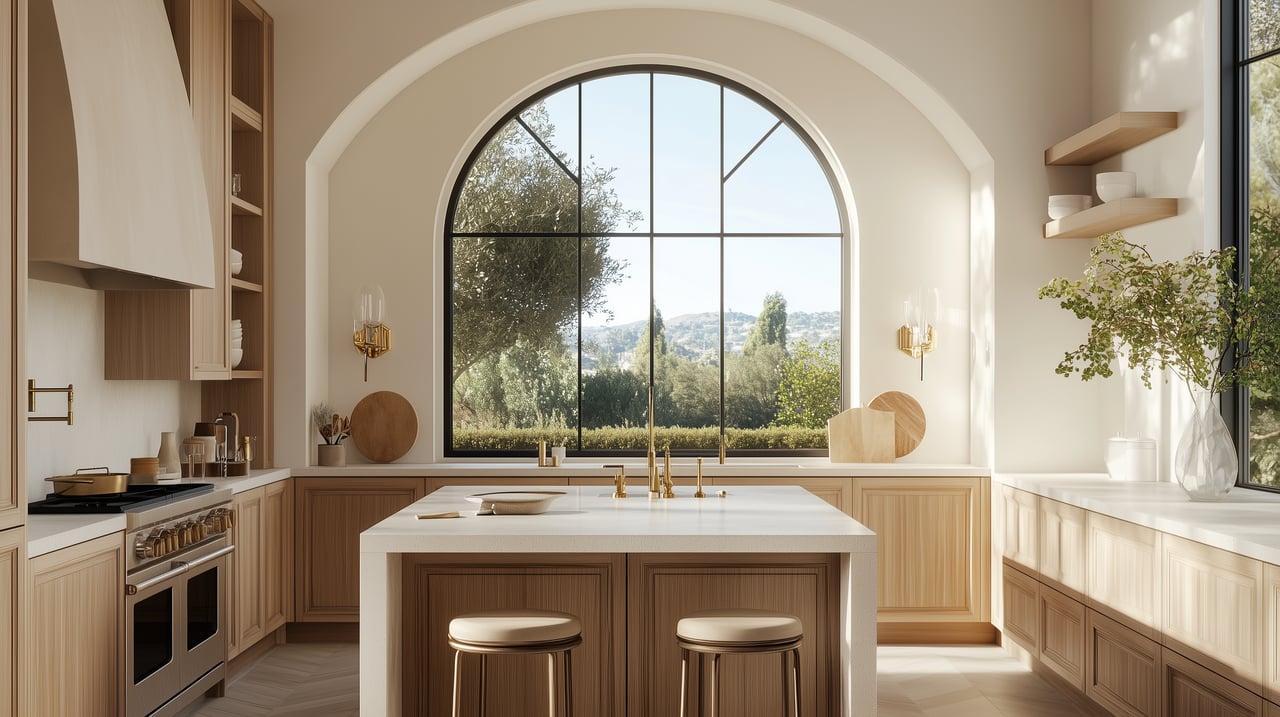
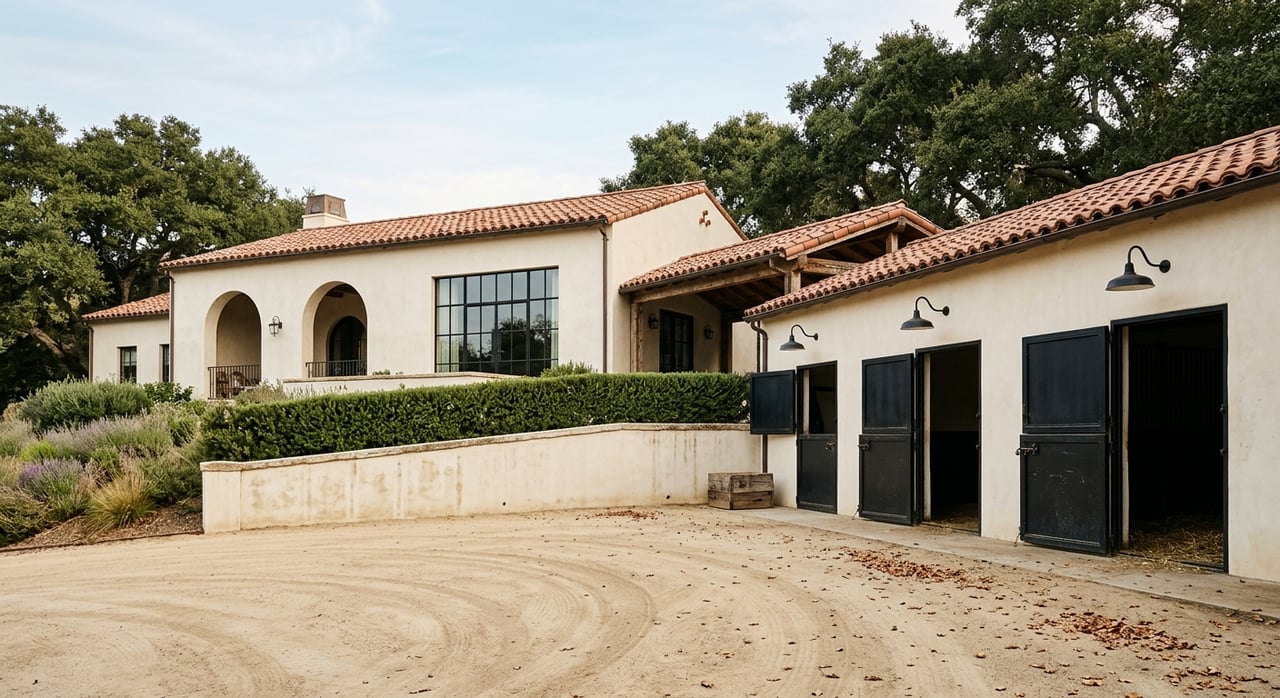
Dreaming of a property where you can keep horses at home and ride close to your front gate? In Los Altos Hills, that idea can be very real, but it is rarely as simple as counting acres. If you are considering equestrian living here, you need to understand trails, zoning, slope, access, wildfire planning, and the approval process before you write an offer. This guide will help you focus on the details that matter most so you can buy with more clarity and confidence. Let’s dive in.
Why Los Altos Hills Appeals to Equestrian Buyers
Los Altos Hills has long protected a residential-agricultural character. Town materials describe a commitment to open land, a rural feel, and a pathway system that residents can use on horseback, on foot, and by bicycle.
That backdrop matters if you want a home that supports horses as part of daily life rather than as an afterthought. The town covers about 9 square miles, yet it offers an unusually strong mix of estate parcels, open-space planning, and horse-friendly circulation.
The Residential-Agricultural district is especially relevant for buyers. In that district, primary uses include single-family dwellings and agriculture, with a minimum parcel size of 43,560 square feet and standards that shape where structures can sit on the land.
For you as a buyer, the big takeaway is simple: usable equestrian value is about layout, not just lot size. A parcel may look large on paper, but the buildable area, slope, driveway design, and open land configuration will determine how practical it is for stalls, turnout space, trailer movement, and privacy.
What Makes a Horse Property Work
In Los Altos Hills, many homes sit on large, site-sensitive lots. Town survey materials note that average new single-family homes have been about 6,700 square feet, while some homes have reached far larger sizes depending on lot conditions.
That scale can support estate living, but it can also compete with equestrian uses if too much of the site is committed to the main residence, paving, or grading. A property can have plenty of square footage and still fall short for horse use.
When you evaluate a parcel, pay attention to how these elements work together:
- Buildable pad location
- Natural slope and drainage
- Driveway width and grade
- Space for barns or stables
- Turnout and riding area potential
- Trailer access and turnaround room
- Relationship to pathways or trail access
- Privacy from the main residence and neighboring structures
A more useful question than “How many acres is it?” is “How does this land function?” That shift in thinking can save you time and reduce surprises during due diligence.
Pathways and Trail Access Matter
One of the strongest reasons equestrian buyers look at Los Altos Hills is the pathway network. The town says the network exceeds 86 miles and is intended for safe, convenient non-vehicular travel throughout the community, including for horseback riders.
That is a meaningful lifestyle advantage if you want to ride without trailering every time. It also affects long-term enjoyment, daily convenience, and how connected a property feels to the broader equestrian fabric of the town.
Town rules also recognize horses directly in pathway use. Bicyclists are instructed to yield to horseback riders and pedestrians, and drivers are told to use extra caution around equestrians.
Still, you should not assume a listing’s “trail access” language tells the full story. The town’s GIS map includes pathway inventory, zoning, land use designations, and property information, which makes it an important tool for verifying access on a parcel-by-parcel basis.
Westwind Community Barn Adds Context
Los Altos Hills also has established equestrian infrastructure. Westwind Community Barn is a town-owned 15-acre facility adjacent to Byrne Preserve, and the town lists amenities that include a dressage court, jumping arena, round pen, grass field, wash racks, tack rooms, and direct access to regional riding areas.
Even if you plan to keep horses at home, this kind of town-supported facility says something important about the local environment. It reflects an equestrian culture that is already built into the community rather than one that exists only in marketing language.
Pathway Adjacency Requires Verification
If a property borders or crosses a pathway area, look closely at the practical details. Shared maintenance responsibilities and pathway rules can affect how you landscape, manage drainage, and use driveways near horse routes.
The town tells residents to keep brush and debris clear, avoid blocking paths, divert drainage away from pathways, and maintain driveway crossings in a way that is safer for horses and riders. Those details may sound minor, but they can influence both day-to-day use and future improvement plans.
Zoning and Site Rules to Review Before You Buy
Los Altos Hills zoning can support estate-style living with accessory structures such as barns and stables, but every property still needs careful review. The Residential-Agricultural district has a minimum parcel size of 43,560 square feet, requires a 160-foot-diameter building circle within each lot, and applies standard setbacks of 40 feet in the front and 30 feet on the sides and rear.
Those standards shape what can realistically fit. They also affect whether an existing horse setup is legal as-is, whether it may be expanded, and how easily you could add structures later.
Before you get too attached to a property, confirm:
- Whether horse use is already legal on the parcel
- Whether any barn or stable is existing, permitted, or both
- Whether there are pathway easements or open-space easements
- Whether the site layout leaves practical room for equestrian improvements
- Whether trailer access works with the driveway and turning radius
These are not small technicalities. They can directly affect value, usability, and the scope of what you can do after closing.
Permit Timelines Can Be Layered
If you plan to build, expand, or materially improve an equestrian property, expect a structured review process. The town’s Building Department handles permit review for building systems, while the Planning Department oversees zoning, site development, environmental review, and coordination with relevant town committees.
The site-development process is layered by design. It may include an initial information meeting, a pre-application meeting, formal application, comment letters, revisions, resubmittal, story poles and hearing notices, a public hearing, and then approval, denial, or appeal.
For a buyer, that means future plans should be tested early. A property that looks ideal for a barn upgrade, detached guest quarters, or a larger equestrian layout may still involve time, design revisions, and multiple professionals before approvals are in place.
Design Constraints Can Affect Horse Improvements
Town design guidance favors development that follows existing contours. It also prefers driveway slopes under 15 percent, encourages minimal and open fencing in natural or dark colors, and discourages bulky ridge-top forms and overly prominent entry features.
That guidance can align well with equestrian properties, but it also means your ideal barn placement, fencing concept, or trailer circulation plan may need to be adapted to fit the site and the town’s design approach. In hillside settings, thoughtful planning matters as much as the wish list.
Pathway Fees May Apply to Barn Projects
Pathway rules are especially important if you are planning new construction or substantial additions. Effective November 18, 2025, the town’s pathway development impact fee is $5.49 per square foot for certain projects, including barns or stables over 900 square feet.
The town also ties pathway easements and construction obligations to the same classes of projects. If you are comparing a move-in-ready horse property with a parcel that needs major work, this is one of several reasons the total cost picture may differ more than the asking prices suggest.
ADUs, Guest Space, and Caretaker Planning
Some buyers want flexible space for guests, household staff, or extended use tied to an estate property. In Los Altos Hills, one ADU and one JADU are allowed on a Residential-Agricultural parcel with an existing single-family house.
ADU review is ministerial, but that does not mean every site is equally easy. Detached units generally have 40-foot front setbacks, 4-foot side and rear setbacks, and 16-foot height limits, and the checklist can require a geotechnical report.
Tree protection also matters. If a structure is proposed within the critical root zone of a heritage oak tree, the ADU ordinance requires an arborist report.
For equestrian buyers, this matters because larger parcels often include mature trees and more complex land patterns. If you are hoping to pair horse use with guest or support space, tree mapping and site planning should happen early.
Wildfire Planning Is Part of Smart Due Diligence
Wildfire is one of the primary threats identified by the town, and buyers should treat it as a core part of property review. Fire hazard maps classify areas as moderate, high, or very high based on vegetation, slope, and fire weather, with local reclassification also considering open-space edges, dead-end roads, cul-de-sacs, and limited egress.
That matters even more for horse properties, which often include larger grounds, vegetation, accessory structures, and private road access. A beautiful rural setting can come with real planning obligations.
The town’s Home Ignition Zone materials focus on the 0 to 5 foot, 5 to 30 foot, and 30 to 100 foot areas around structures. In very high fire hazard zones, the town says 100 feet of defensible space is required.
The town also tells residents to plan for pets and other animals. If horses are part of your lifestyle, evacuation planning, trailer access, and property layout deserve as much attention as aesthetics.
Utilities, Roads, and Access Need Early Review
Do not assume water, sewer, septic, and road issues will sort themselves out later. In Los Altos Hills, those questions can materially affect cost and feasibility.
The town says property owners are responsible for sewer laterals, and standard approval conditions may require sewer connection if a property is within 200 feet of a sewer line. Public Works materials also include an onsite septic systems manual, which is another reason to verify what is actually in place before you remove contingencies.
Water use is worth reviewing too. The town’s drought guidance limits irrigation and points residents to leak-check tools for local water customers, which can be relevant if you are thinking about landscaping, arena dust control, or larger irrigated areas.
Private Roads Need Special Attention
Private roads deserve their own legal and practical review. The town’s sample private-road maintenance agreement says owners should review it with their own legal counsel, requires road maintenance for safe ingress, egress, and emergency vehicle access, and is intended to run with the land.
A separate reimbursement agreement also shows that road-improvement cost sharing can attach to future site-development permits for a residence, secondary dwelling, or barn or stable of at least 900 square feet. For a horse property buyer, that means the road question is not only about convenience. It can also affect future expense and project timing.
Build the Right Advisory Team
An equestrian purchase in Los Altos Hills often benefits from more than a standard home inspection and loan preapproval. Because local rules touch zoning, access, slope, trees, wildfire, drainage, and roads, many buyers need a broader bench of experts.
Depending on the property and your goals, that team may include:
- A local buyer’s agent
- A planning consultant or permit expediter
- A civil engineer or surveyor
- A geotechnical engineer
- An arborist
- A wildfire-hardening consultant
- A contractor familiar with stalls and arenas
- Land-use counsel if private roads or easements are involved
This kind of team approach is especially helpful if you are choosing between a finished equestrian estate and a parcel with future upside. In higher-value transactions, clear answers early can protect both your time and your negotiating position.
A Smart Offer Starts With Better Questions
Before writing an offer, ask focused questions that reflect how Los Altos Hills actually works. General enthusiasm is not enough when a property’s usability depends on local conditions and approvals.
A strong due diligence list should include:
- Is horse use legal on this parcel today?
- Are the barn, stable, or other structures permitted?
- Are there pathway, open-space, or other easements?
- Does the driveway work for horse trailers and emergency access?
- What fire hazard zone applies, and what defensible-space obligations come with it?
- Is the property on sewer, septic, or both-related infrastructure?
- Is guest space, an ADU, or other support space realistically feasible?
When you ask better questions, you make better decisions. In a market like Los Altos Hills, that level of preparation is often what separates a smooth purchase from a costly surprise.
If you are considering an equestrian property in Los Altos Hills, the goal is not simply to find a beautiful home with land. It is to find a property that truly supports how you want to live, ride, and plan for the future. For tailored guidance on evaluating estate properties, access, and long-term usability, request a white-glove consultation with the Straser Silicon Valley Team.
FAQs
What makes Los Altos Hills attractive for equestrian living?
- Los Altos Hills combines a residential-agricultural setting with estate parcels, horse-friendly pathways, and established equestrian infrastructure, including the town-owned Westwind Community Barn.
What should buyers verify about trails in Los Altos Hills?
- You should verify actual pathway access and adjacency on the specific parcel using town mapping tools rather than relying only on listing descriptions.
What zoning details matter for horse properties in Los Altos Hills?
- Key factors include minimum lot size, the required building circle, setbacks, existing permitted structures, and whether easements or site constraints limit equestrian use.
Do barn or stable improvements in Los Altos Hills require permits?
- Yes, many improvements will require planning and building review, and projects over certain thresholds may also trigger pathway-related fees or easement requirements.
How important is wildfire review for horse properties in Los Altos Hills?
- It is essential because fire hazard classification, defensible-space requirements, access conditions, and animal evacuation planning can all affect how the property functions.
What utility questions should buyers ask about Los Altos Hills equestrian homes?
- You should confirm sewer or septic status, sewer lateral responsibility, water-related constraints, and whether future improvements could trigger additional utility requirements.
Why do private roads matter when buying a Los Altos Hills horse property?
- Private roads can affect legal obligations, maintenance costs, emergency access, trailer usability, and even future improvement expenses tied to permits.
Who should be on a Los Altos Hills equestrian property due diligence team?
- Depending on the parcel, buyers often benefit from a local agent, planning consultant, engineer, surveyor, arborist, wildfire specialist, contractor, and land-use counsel.